


Canadian scientists surprised by Seychelles tsunami effects |31 January 2005
The four-member team, which arrived on January 22 as part of a mission coordinated by the Intergovernmental Oceanographic Commission of the United Nations Educational, Scientific and Cultural Organisation (Unesco), thought Seychelles was also extremely fortunate given the timing of the event.
Team leader Dr Lionel Jackson told reporters on Thursday January 27 that the low tide when the tsunami hit, combined with the fact that it was not a working day and there were few people in Victoria, may have saved a number of lives.
“Had it been a normal working day, it would have been a catastrophe,” said Dr Jackson, who together with the rest of the team – hailing from the Geological Survey of Canada, an agency within the Canadian Ministry of Resources – had just met with environment principal secretary Rolph Payet at the Botanical Gardens.
Dr Jackson said he was surprised by what he and the team had seen during their visit, including the damage to some western parts of the island, which was struck hard despite being sheltered from the direct impact of the wave.
He confirmed that the local theory about the waves refracting around the edges of Mahe and Praslin and rushing inland toward some of the larger bays on the other side of the islands appeared to be the case.
The team, using sophisticated GPS survey systems, was beginning to understand other parts of the story as well, such as the height of the waves when they reached Seychelles and the distribution of damage along the coasts.
Dr Jackson said “hot spots” that sustained heavy damage in Seychelles are likely to be vulnerable in the event of another tidal wave – useful information in light of a proposed early warning system for the Indian Ocean.
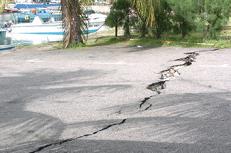
The scientists also conveyed their surprise regarding the large crack along the sea wall at the fishing port in Victoria. “We’ve never seen anything like that before,” Dr Jackson said.
The tidal wave may have inundated the sea wall with water on the way in, and on the way out the rapid drainage may have provided enough force to split the wall and force it outward, he added.
When asked about his initial reaction to the tidal wave damage in Seychelles, Dr Jackson said he was actually amazed at how quickly the population had cleaned up and went back to their daily lives. “It’s a tribute to the people here, even though it makes our task more difficult (because there’s less evidence to collect).”
The research team still has more work to do before they leave – a visit to survey the damage on Praslin is also scheduled. The researchers are expected to compile a report that will be released a few weeks after the mission.
The study may also be published in scientific journals in the future, said team member Dr Donald Forbes, who noted that Seychelles’ surprising results could be of global scientific interest.