


2006 Budget Address by President James A. Michel, Minister for Finance, before the National Assembly-'Our future successes will depend on preserving our gains' |01 December 2005
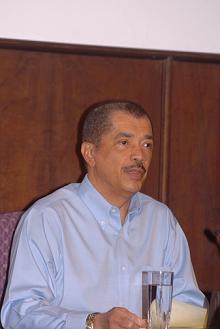
Mr. Speaker,
Honourable Members of the National Assembly,
People of Seychelles,
On this day last year I presented to you the 2005 Budget which reflected my determination to take Seychelles and the Seychellois people further on the road of progress and prosperity.
The 2005 Budget was part of the new platform for our medium to long-term development. It introduced further measures to modernize our economy, accelerate its growth, inspire more confidence in both local and foreign investors and as a result create more wealth and employment.
Throughout 2005, we strove to achieve these objectives and we have delivered. This is what I said I would do and in 2005 my Government has:
- Carried out changes in Government Departments to improve efficiency and service delivery
- Created new bodies outside ministries such as the Seychelles Civil Aviation Authority, the Seychelles Tourism Board, the National Statistics Bureau and the Non-Banking Financial Services Authority
- Provided further incentives to the tourism industry
- Provided new incentives to the Agricultural and Fisheries sectors
- Concluded agreements for the construction of a 4th and 5th tanker
- Enacted measures to assist musicians
- Promoted cottage industries
- Increased support to small businesses
- Continued our programme of trades tax reduction
- Removed the requirement for import permits for most goods
- Adopted provisions for the declaration of assets by public servants
- Reduced the stock of domestic debt
- Established the Esmeralda Bond to encourage a culture of personal savings
- Reduced and in certain cases restructured external debts
- Adopted our divesture strategy
- Finalised the Investment Code
- Created the Seychelles Pension Fund
- Maintained a fiscal surplus despite adverse conditions
One measure that I spoke about in the 2005 budget address has not been fully implemented as yet. The privatisation programme, which was to start in the first quarter, has been delayed to the fourth quarter as we have needed overseas expertise and guidance. Government has been working with international partners to develop the most appropriate framework for the sale of assets earmarked for privatisation. We remain committed to the programme, but we do not want to repeat the mistakes made by some other countries. We want the privatisation we undertake to be for the real and long-term benefit of Seychelles and the Seychellois people. We also want, as far as possible, for every Seychellois to have the opportunity to buy a share in a privatised venture.
Today, our country is entering the modern economic environment. I see ourselves as a young but maturing and optimistic nation, ready to face the challenges of the new times.
The core of my 2005 budget was based on the conviction that together we can create our prosperity. The events that we have faced this year and the manner in which we have responded to them, have further reinforced this conviction. It has been a difficult year: we have faced unprecedented natural disasters and the highest fuel prices ever. But we have also together created the conditions to increase the wealth of the nation. There is more confidence in our country and investments are on the rise. More jobs are being created. We are earning more foreign currency and our net reserve position has improved.
In short, our efforts, perseverance and resilience as a nation over a difficult period are starting to bear fruit.
In addition to the improvements in our economic situation, we have continued to invest substantially in our social programmes.
In 2006, I am proposing an economic programme that benefits all Seychellois and builds on the 2005 measures. My vision for Seychelles is of a society that is both dynamic and caring – a vision which I believe epitomises our Seychellois character. It is a vision which should inspire us to develop our full economic potential while ensuring that the fruits of our hard work are shared by all of our people.
Mr. Speaker, before going into the details of the 2006 budget, I will highlight major elements of our performance in 2005.
Developments in 2005
The international economy remained strong in 2005 despite the rising oil prices and natural disasters in many parts of the world. The increasing oil price was caused to a large extent by the high demand of the newly industrialised countries, which continued to enjoy high growth. The hurricanes experienced by the USA exerted further upward pressures in the oil market in the second half of the year. Inflationary tendencies started to appear especially in countries which are heavily dependent on importing this commodity. A sector especially affected was the travel industry, while the basic costs of freight and importation of goods have also risen.
On the domestic front, the tsunami and the torrential rains of late December 2004 caused considerable damage to the country’s capital stock, resulting in an important negative shock for the start of 2005. We commend the Seychellois people for their solidarity and strength of character and we thank all local and overseas partners, foreign governments and international agencies.
The natural disasters were of concern to the Government as it threatened to derail the reforms that we are undertaking, particularly our fiscal policy. But despite these difficulties, and the increase in fuel prices, we were determined to maintain the strong fiscal stance started in 2003. For 2005 our budget performance is better than forecast. Given the strong fiscal position, we have been able to reduce domestic debt and consequently relied very little on Central Bank funding.
The improvements in the fiscal accounts translated into a general decline in liquidity and for the year up to October, the fall was 0.6 per cent. Since the reforms started in 2003, liquidity movement has been well contained and has remained in single digits.
The increase in the price of oil in the latter part of the year, exerted pressure on the economy. As a net oil importer, our small economy was not spared the effects of the price hikes. The average value of fuel increased from US $38 a barrel in 2004 to US $60 a barrel in 2005. In 2002 our domestic imports were US $17 million, in 2003 US $23 million, in 2004 US $28 million, and in 2005 an all time high of US $38 million. Government continued to absorb the increases in price and maintained the prices at the petrol station, electricity tariffs and public transport charges. Consequently there has been a decline in its tax revenue
Despite the above constraints, the Government implemented its announced strategies. I gave my undertaking for a strong fiscal position; and we will achieve a surplus for a third consecutive year. Mr. Speaker, this surplus, at 8% of GDP, will be the highest ever. I consider this to be no small achievement when we take into account the context in which we have done this.
We have also made progress concerning FDI flows into the country with over US $40 million registered in 2005. The operations of the Seychelles Investment Bureau have reinforced the investment climate and investor confidence has never been stronger. This will be further strengthened by such other measures as our ratification of the UN Convention against corruption and the adoption of the Investment Code. There have also been encouraging developments in the offshore sector with SIBA expecting 50% more revenue in 2005. My Government has also extended its network of double taxation avoidance treaties, the latest of which is being negotiated with Belgium. Such agreements are a further mark of confidence in our economy.
We have restructured our bilateral debts with the governments of the People’s Republic of China and the Republic of India and our multilateral debts with Kuwait Fund and Abu Dhabi Fund. We have engaged in discussions with the ADB and hope to reach agreement regarding payment of arrears early next year. We have also resumed payment of our commitments to the World Bank and OPEC Fund. Positive discussions are ongoing with other bilateral and multilateral creditors. On the domestic side, we have restructured our debts. We have also launched the Esmeralda bonds to promote savings and as part of the domestic debt restructuring. The sale of the first SR25 million worth of individual bonds is almost complete.
The restructuring agreements provide for longer maturity, giving us a cushion while the economy re-adjusts.
As we all know, our country is facing certain foreign exchange constraints. This is an issue which cannot be resolved overnight. We must maintain measures to facilitate investment, increase productivity and enhance our foreign exchange earnings. This approach Mr. Speaker, ensures that we continue to develop while maintaining our socio-economic gains. The flow of foreign exchange into the country is improving. Foreign exchange earnings this year up to October totalled SR1.1 billion compared to SR973 million in the same period of 2004.
New incentives to the tourism industry have given another boost to this sector. Several establishments are using the incentives to upgrade and offer much improved products and service to our guests. A number of our hotels and resorts are acclaimed as being among the best in the world. Seychelles enjoys its well-deserved reputation to be not only a destination of unparalleled beauty but, more and more importantly these days, one of safety and security.
Up to the end of October, arrivals totalled 109, 599, an increase of 6 per cent compared to the same period in 2004. The rise in numbers has been helped by the marketing exposure of the country through the new airlines in late 2004 and the repositioning of Air Seychelles which have helped to broaden the clientele base. The hotels themselves have also played a part in marketing. Foreign Exchange flows for the tourism sector between January and October are estimated to be SR947 million, compared to SR880 million for the same period in 2004. The improved performance is expected to continue in 2006 as new hotels open.
The Agriculture and Fisheries (Incentives) Act introduced in April, is providing the fisheries and agricultural sectors with a series of incentives designed to improve productivity and competitiveness and ensure that the two sectors increase their contribution to national wealth creation.
In the fisheries sector, industrial fishing has maintained high catch levels resulting in increased transhipment activities. The total revenue from industrial fishing including licenses, transhipment fees and services is estimated to be in the region of SR400 million. Artisanal fisheries were adversely affected by the December 2004 tsunami, but are staging a remarkable recovery this year as marked by their catch of 4200 tonnes.
In all sectors, Government has sought to improve the employment situation and has put in place a series of special training programmes including the Apprenticeship Scheme, the Skills Acquisition Programme, and the Small Project and Business Development scheme.
2005 Budget outcome
This year, we will achieve a surplus of around SR318 million or 8% of GDP, 1% more than budgeted.
Government expects to collect SR2.109 billion in revenue. This is higher than what was budgeted despite lower trades tax receipts and less dividend collection because of higher Social Security contributions.
Government expects expenditure to be SR1.792 billion which is SR81 million more than budgeted. This is mainly due to higher spending in certain Government services.
2006 Fiscal Objectives
The budget that I am presenting today will complement the steps that we have already taken, not only to improve the fiscal position but also to streamline procedures and make government more efficient and responsive.
It is also a budget which will see some of the fruits of the hard work of the past few years being distributed and shared among our people.
For 2006, I am aiming for a budget surplus of SR177.946 million or 5% of GDP.
Total revenue is forecasted to be SR1.929 billion and total outlays SR1.751 billion.
- Revenue
The SR1.929 billion revenue for 2006 is a decrease over the 2005 budget of around SR60 million due mainly to further reductions in trades taxes. The reductions are in line with Government’s endeavour to modernise the economy, facilitate business, create the enabling environment for the private sector and reduce the cost of living.
SR40 million more is expected as dividends from parastatals, and miscellaneous revenue.
- Expenditure
The proposed expenditure for 2006 is SR1.751 billion which is SR40 million more than the 2005 Budget. Total appropriation is SR1.320 billion, a 10% increase over 2005. This is because of planned expenditure for ministries, which is proposed at SR835 million. Current outlays will be SR1.514 billion.
In line with our commitments to education and health services, it is proposed that the ministries concerned again receive the largest allocations. The Ministry of Health and Social Services will receive SR184 million, and the Ministry of Education and Youth SR181 million. This represents 5% of GDP for each sector.
The Police will receive an increase of SR10 million with a total allocation of SR70 million. Peace and security are central to all our other efforts to improve the economy and our social welfare. We will continue to strengthen the Police Force through professional training and allocation of necessary resources.
The preservation of the environment and natural resources remains a priority. An allocation of SR61.299 million is made for 2006.
The Judiciary will receive SR8.5 million, representing an increase of SR1.5 million. A frequent complaint is that the process of administering justice takes too long. Too many people on remand are waiting trial. I have asked the Judiciary to spare no effort in ensuring that court cases are dealt with in an efficient and timely manner in fairness to all concerned. The increase in their allocation should contribute to that process.
Seychelles is increasingly active in international relations and the Ministry of Foreign Affairs has a key role to play in defending and promoting Seychelles’ interests in an increasingly globalised world. In this context I am pleased to announce that Seychelles will be rejoining SADC in 2006. We propose a budgetary allocation of SR10.4 million for the Ministry of Foreign Affairs.
We are also proposing for SR170 million under centralised payments to cater for a number of activities and in support of national organisations. We are increasingly conscious of the importance of disaster preparedness. An allocation of SR1 million has been made to the National Disaster Secretariat. A new allocation of SR2 million is proposed for the Football Federation and SR3.5 million for the Concessionary Credit Unit. SR2 million is provided as a contribution to religious organisations. This is to assist in the construction and renovation of certain churches.
I should like to express the Government’s appreciation for the most important role that religious organisations play in the promotion of spiritual and moral values in our society. Our society faces major challenges in the form of drug and alcohol abuse and the spread of HIV/Aids. These are challenges that require the common and concerted efforts of Government, the Churches and the whole of society.
An additional SR7 million has been proposed under subventions to regulatory bodies and SR24 million more to parastatals and other bodies, mainly SPTC and SBC.
- Capital Outlays
Capital outlays will be maintained at R200 million in 2006. The main area of expenditure will be the new housing projects and the completion of ongoing projects of 2005.
The 2006 Budget Strategy
Budget 2006 builds on the foundations laid in the budget of 2005 for our medium to long term development. It aims to promote economic growth and the creation of wealth while furthering the well-being of the population and addressing their concerns. It is a budget for every Seychellois.
The 2006 budget proposes measures which will:
- Address the cost of living and improve the family budget
- Create employment opportunities for our population, in particular the youth;
- Improve the conditions of service of the working population and promote personal responsibility and productivity;
- Further improve the management and performance of the economy.
- Increase the confidence of investors, in particular Seychellois, in the potential
of our country
- Promote the entrepreneurial spirit and business development;
- Improve public service delivery and promote better coordination and implementation of policies;
- Reduce the costs of employment through a reduction in employers’ contribution to social security;
- Control Government borrowing, and manage public debt in support of the economic growth process.
During the year, I visited a number of work places in ministries. With the Vice- President, I also held public consultations throughout the country. We learnt a lot through those meetings and we are determined to address the issues that came up. I have asked the ministries and services concerned to follow-up on specific points and I expect them to do so diligently and to ensure that where justified, the necessary improvements are made.
Apart from services, the public across the country raised a number of other issues, notably the cost of goods in the shops and the cost of living, the employment situation and housing. We have been considering how best we can address these issues and the 2006 Budget gives them due attention.
For very many Seychellois families, the cost of goods, transport and housing account for a substantial part of their spending. The budget introduces a number of measures that should reduce the cost of living over time.
Measures to reduce the cost of living
The government will start with the following:
1) Public Transport
Taking into account that several commuters have to change buses to reach their destination and that each change requires a new ticket, SPTC will in January 2006 introduce a one day ticket of SR6. The one day ticket will enable, for example, a Bel Ombre parent who has to drop a small child at a Day Care centre at Beau Vallon before taking another bus to go to work and do the reverse journey in the afternoon, to do so for SR6 instead of SR12. The single fare of SR3 will remain.
Free bus services currently available for pensioners will also be extended to persons registered as disabled and to all post-secondary students.
2) Tax Reductions
Since 2003, Government has been reducing trades taxes on imports gradually. As part of the efforts to reduce the cost of doing business and the cost of living, further reductions in trades tax will be made on raw materials and equipment for manufacturing and on certain food items.
The budget makes provision for a trades tax regime where most trade tax would be collected on four main items, namely fuel, motor vehicles, cigarettes and alcohol. There will be further reductions in the rates already published for 2006 for a number of items, especially food. In many cases the trades taxes will be reduced to 0%. All other trade taxes will be reduced so that the average rate of tax will be around 10%.
Trades taxes on all raw materials, selected capital equipment and machinery for the manufacturing sector will be reduced to 0%. This will benefit the manufacturing sector and cottage industries and bring us in line with regional requirements such as with COMESA.
Trades taxes on domestic household appliances such as fridges, washing machines and combined gas/electricity cookers will be removed completely. Trades taxes on beauty products and cosmetics, hair products, etc which currently are at an average of 50% will also be removed completely.
To protect our local production we have established a seasonal and a sensitive agricultural list. For the seasonal items, in times of plenty, the importation of these items for retail will be regulated through import permits. For sensitive items, such as bananas, sweet potatoes, cassava and roses, Government will protect the farming community through a high protective tax.
For local industries, a similar tax will apply on certain imports, such as tea, UHT Milk, canned tuna, prawns, savoury crisps. This will help to protect and encourage local production and employment.
In the case of imported non-alcoholic beverages such as fruit juice and bottled water we will move away from an ad-valorem tax to a specific tax of SR15 per litre.
For imported beer, a SR35 per litre tax will be maintained. The present levy on beer and all other items will be removed except for cigarettes and dish antennae.
Government has decided not to implement the published trades tax reduction on imported beer which was scheduled for 2006, as a further measure to protect local industry and the employment it generates.
The Government is currently assessing the tax structure on locally produced goods. The tax on all locally produced soft drinks will be reduced so that a 33cl bottle will retail at SR2 excluding the bottle deposit. Similarly tax on local beer is being reduced, from R24.85 to R19.45 per litre. This means that a 28cl bottle of Seybrew beer, currently costing SR10.50 will retail at SR9 excluding the bottle deposit.
All the new rates will take effect on 1st December 2005 except for the reductions on locally produced drinks which will be effective from 9th December.
It is important that the benefits of the reductions in the various taxes are passed on to the consumers. Price control staff have been visiting shops to verify stocks and prices of goods to deter the practice of selling newly imported items which benefit from the reductions, at the older prices. I call on all traders to participate in our common effort to provide goods to the Seychellois people at fair prices.
3) Reduction in the price of LPG
As of 1st December, the price of LPG will also be reduced from SR9.33/kg to SR7/kg. This means, for example, that a 4.5kg cylinder which currently costs SR39.50 will cost SR31.50, one of 9kg costing SR84 will cost SR63, and a 12kg costing SR112 will now cost SR84.
4) Domestic air travel
From 1st January 2005 the rate of Goods and Services Tax (GST) on Domestic Air Travel will be adjusted to 7% to be in line with other tourism related services. Thus a Mahé-Praslin return ticket currently costing SR280 for a resident will now cost SR260.
5) Telecommunication charges
In recent years there have been welcome reductions in rates for both local and international calls. Following initial negotiations with Cable and Wireless and Airtel, it is expected that there will be further reductions in the coming year.
6) Strengthening consumer protection
From 1st December 2005, a Consumer Affairs Unit in the Department of Finance will act as a clearing house for consumer complaints. It will reinforce the provisions of the 1997 Consumer Protection Act and other complementary laws and regulations. This unit will promote good trading practices in the interests of consumers and traders. It will have the power to investigate cases of alleged infringements and prosecute where necessary.
Mr. Speaker, our efforts to reduce the cost of living for all Seychellois are reflected not only in the points I have just announced but also in other measures in this budget.
Housing
The Government is committed to its policy of facilitating each Seychellois family to have their own home. A total number of 46 projects with contract values totalling R750 million and representing 3,257 housing units are in various stages of construction.
In addition to major advances in our housing programme, the Housing Finance Company (HFC) has been disbursing loans for house construction and for land purchase. 736 loans totalling R86.4 million have been granted to families in the period January 2004 to date. 906 home improvement loans worth SR18.3 million have also been disbursed over this period. A total of 2,092 families have benefited from our housing and loans programmes since January 2004. In 2006, it is planned that 1,075 houses will be completed under the ongoing programmes.
The Home Ownership Scheme launched by Government in 2002 has achieved remarkable results. Some 1,900 persons have benefited directly. The revenue of SR83 million it has brought in is helping Government to sustain its housing programme.
In the 2005 Budget address, I said that further measures would be taken to encourage families to buy and own their own homes.
The Government is introducing a new Home Ownership Scheme to benefit families who have legally occupied PMC (Property Management Company) houses as well as those who have taken loans from SHDC, prior to 31st December 2003.
The scheme which will start on 1st December 2005, will make it possible for families who have been living legally in a PMC house for 15 years or more and who are up to date with their rent to acquire their house and corresponding land without any further payment. Families who have been repaying a loan with SHDC for 15 years or more and who are up to date with their repayment will not pay any further amount. Their loan will be considered as having been paid in full.
Families who have occupied their house or repaid their loan for a period less than 15 years will be able to buy their house or pay off the total balance of their loan at substantially discounted prices based on the period of occupancy and repayments made.
People joining the scheme will also benefit from a minimum 20% reduction in their existing rent or loan repayment.
Some 3,800 families stand to benefit from this scheme. The offer made in the scheme will be for a limited period and it is in the interest of the families concerned to seek information on the scheme. I encourage all families concerned to do their best to become the proud owners of their own house which they can later pass on to their children or grandchildren. How many persons in other countries, have such an opportunity. What is only a dream for many people elsewhere can become a reality for the ordinary Seychellois family.
Families occupying PMC flats and bed-sitters as well as houses ear-marked for redevelopment prior to 31st December 2003 will benefit from a 10% reduction in their rental payments with effect from 1st December 2005.
All these measures are also part of my Government’s drive to bring about a reduction in the cost of living.
Employment
During this year Government has looked closely at the employment situation. In the district consultations, the issue of unemployment, especially among the youth came up. It was also pointed out that in many cases unemployed persons are reluctant to take jobs immediately available. In the last few months the Employment Department has been actively engaged in providing advice to job seekers and guiding them to appropriate vacancies.
In September 2005, there were 1,596 registered job-seekers in Seychelles, and the unemployment rate was 3.8%. The number of persons in formal employment has increased from 38,763 in September 2004 to 40,128 in September 2005.
In the coming year there will be increased employment opportunities but, we must also as a society, address the question of willingness to take up available employment.
To further facilitate employment and business development, the government is reviewing social security payment by employers. A 20% cap on contributions by employers in the tourism industry has already been implemented and similar concessions extended to the agriculture and fisheries sector.
I should like to announce that with effect from January 2006 the rate of employers’ contribution for the salary range of SR2,001 to SR10,000 will be reduced from 35% to 30%, for all other sectors of the economy.
The aim of this reduction is to facilitate employment and to improve employees’ remuneration in the private sector.
Government will also continue to localise posts occupied by expatriates as far as is possible.
Senior citizens
The progress that our country has made would not have been possible without the contribution of the senior citizens of our society. Our parents and grandparents are an important source of knowledge, experience and guidance for us and the younger generations.
I should like to emphasise once more the responsibility we have towards our elderly and the love, affection and care that we should give them.
The Government will continue to play its part through its social policies. I am pleased to announce that provision is made in the budget for an increment of SR100 to their Social Security benefits, which is to take effect in January 2006.
Public Service
The Government will persevere in its endeavour to improve the efficiency and effectiveness of the public service. My visits to workplaces and exchanges with the staff have been enlightening.
I recognise that many public servants are performing commendably, but we must aim for improvements on the part of all.
Government is currently undertaking a review of public sector salaries with technical assistance from the Commonwealth Secretariat to ensure that remuneration is done in a fair and sustainable manner. The system of periodic gratuity is also under review.
New schemes of service for teachers and members of the Defense Forces will be implemented in 2006. Schemes for the health sector are also being finalised and for implementation in January 2006.
I am pleased to announce that this budget makes provision for enhancements to the basic salaries of public sector employees in posts below the senior executive level. These will take effect from 1st January 2006 and will be as follows:
- An increase of SR300 per month for public sector employees holding posts at Grade V and Grade IV, i.e. posts in salary bands SP20-25 and SP25-29.
- An increase of SR200 per month for public sector employees holding posts at Grade III and Grade II level, i.e. post in salary bands SP29-34 and SP34-39.
- An increase of SR100 per month for public sector employees holding posts at Grade I and Senior Officer level, i.e. posts in salary bands SP39-44 and SP44- 49.
The remuneration of officers employed on contract terms will be reviewed upon renewal of contract, as is the current practice.
I call again on employers in the private sector to make use of the reductions allocated in social security contributions to provide an increase to benefit their employees.
Graduates
In my National Day address I made special mention of the significant investment our country makes in our graduates and the important contribution they can and should make to national development.
A new remuneration package will apply to graduate employees in the public sector as from January 2006. The housing allowance of SR2,000 will be extended to three years. In the fourth and fifth year of employment a graduate in the public sector can expect to receive a minimum basic salary of SR4,725 per month and a new graduate salary supplementation of SR2,000 per month. From their sixth year of service graduates will be offered public sector commission contracts.
The Seychelles Pension Fund
The establishment of the Seychelles Pension Fund is a significant achievement of my government. In 1979 our government instituted a social security fund which over the years has guaranteed a basic old age pension to our people. In 1991 the Pension Scheme was introduced to provide an additional income upon retirement. In its 25 years of existence, the Social Security Fund has laid a solid foundation which today permits us to establish the new Seychelles Pension Fund.
All workers, not only civil servants and employees of a few companies as in the past, can now look forward to an additional pension based on their contributions.
Hard work pays.
The more wealth we produce, the more we can benefit when we retire.
The Seychelles Pension Fund belongs to all who contribute to it. It is the fruit of our labour and savings. I appeal to all Seychellois, especially the young, to understand how the fund works and to take up available employment opportunities in order to be able to contribute to the fund and start saving for a comfortable life later.
Business opportunities and privatisation
It has long been a principle of the SPPF and this Government, that Seychellois of all backgrounds should have the possibility of becoming investors or business owners. That is why today in our country, all taxi operators are the owners of their own cars. Likewise instead of there being only a few, some fifty operators have a share in the car hire business. The same is true of hire craft operators.
The DBS, YES and SEnPA have put in place the facilities to enable many young people and housewives to start small business activities and cottage industries. As at mid-November, there were 543 registered cottage industries and SEnPA receives a dozen new applications a week. There are 317 registered small businesses, with on average 4 new applications a week.
The construction of the micro-enterprise centre at Providence will start in early 2006 through funding from the Seychelles Pension Fund. Arrangements are also being made for the funding of a similar centre at Cap Samy, Praslin, and for the kiosks for artisans to be built at Port Glaud.
Opportunities for investment and ownership should be open to all Seychellois and the new phase of privatisation will provide such opportunities.
In the privatisation of its assets Government bears in mind three major points: the protection of employment, the ownership of shares by the staff and sale of shares to the general public.
The process for the privatisation of Sacos is underway. As already announced Government will retain a 20% stake and 30% of the shares are being tendered to strategic investors.
We want to encourage the development of a share ownership culture in the country. Therefore 20% of the shares will be offered to the staff of Sacos. Furthermore, another 30% of the shares will be available for purchase by any Seychellois. The cost of each share will be ascertained early next year.
The Government is looking at ways to ensure that within this 30%, every Seychellois over the age of 18 will have the opportunity to purchase a share in Sacos. This is indicative of our commitment to share the wealth of the country among the whole population.
Importation of essential goods
In our endeavour to modernize the economy, we have gradually moved to open up the trading regime and facilitate the importation of goods. The system in place since the 1st January 2005 has enabled most goods to be imported without an import permit except for goods classified as “restricted”, such as pharmaceutical drugs, plants and animals.
As a small country that has to import a large proportion of the basic commodities it needs, we have to ensure the efficient importation of essential goods. Government has introduced the tender system for the provision of commodities, namely, rice, sugar, flour, margarine, milk, oil, vegetables, fruit and meat.
Through the tender system, we want to ensure the availability of essential commodities at fair prices while guaranteeing quality, sanitary and phytosanitary requirements. Government will be responsible to stock and distribute these essential items.
Tenders have already been awarded for the supply of flour. Tenders have also been invited for the supply of sugar, ginger, garlic, onions and potatoes. Tenders for other items will be invited when existing supply contracts expire. Government will ensure foreign exchange for the payment of goods tendered.
Review of Trades Tax Act
The Office of Tax has just completed an exercise to revise the Trades Tax Act. New HS codes have been introduced for certain items and others re-classified. As part of this exercise the trades tax on vehicles of 1300cc and less will be reduced from 125% to 75%. Trades tax on delivery vans and pick-ups not exceeding 1.5 tonnes will also be reduced, from 50% to 25%. This will be of benefit to small business.
Stamp Duty
At present the stamp duty on the sale or transfer of land is applied at a rate of 4% on the first SR50, 000 and 10% on the remainder. This will be changed to a flat rate of 5%. Stamp duty will be exempted on transfers between parents and children, inheritance, and transactions arising from court settlements of matrimonial cases where the value of the land does not exceed SR1 million.
Economic Sectors
The Tourism Sector
I am confident that our tourism industry is set on its recovery course and this is evident from the high interest being shown by foreign and local investors. The Barbarons Meridien and the Northolme have undertaken important upgrades and have reopened their doors this year. Their investments total over US $30 million, providing 300 jobs. The development of Eden island as an integrated tourism project which will be implemented in phases over a number of years also started this year.
New projects that are already under way and that are expected to be completed in 2006 include a new hotel to be operated by the Southern Sun group at Anse Louis as well as a project at La Passe on Silhouette. These projects combined should provide investment to the value of US $54 million and over 400 jobs. A further 10 new projects are also scheduled for launch in 2006 including an extension of Banyan Tree, a second development on Silhouette, a new hotel on the current site of Allamanda hotel at Anse Forbans, an extensive project for Port Launay as well as projects from world renowned companies such as Beach Comber on Praslin and Four Seasons at Petite Anse. Total investment from these new projects over the next 2 years is expected to be in the region of US $475 million and is expected to create over 1,700 new jobs.
The new developments highlighted are expected to bring an increase of around 28,000 visitors which would result in an increase of around US $60 million per annum in earnings. These projects will also have a multiplying effect on the economy as a whole.
Alongside these new developments, the Government believes that product enhancement should be our priority in keeping with our vision of Seychelles as a quality destination.
A number of small establishments are already benefiting from the small hotel enhancement programme in partnership with the trade. The programme will in the year 2006 be pursued with renewed vigor.
The development of human resources in the sector will continue to be a priority and Government will encourage increased involvement of operators in this endeavour.
Renovation of our international airport is well under way and if all goes well the newly refurbished facilities will be operational in 2006.
Air Seychelles
The worldwide airline industry has been experiencing a crisis for the last 5 years. With the further opening of air access and the arrival of two major competitors in 2004, there were fears that our national airline, Air Seychelles, would not survive.
It was the view of my Government that Seychelles as a destination needed more exposure and the arrival of more foreign carriers would bring about interest not only in terms of direct marketing but also foreign direct investment. I am happy to say that this is proving to be the case.
For its part Air Seychelles has succeeded in implementing the measures necessary to ensure not only its survival, but improved performance. It is already in negotiation with aircraft manufacturers to replace its B767s and in the process of purchasing another Shorts 360 to augment its domestic fleet. Air Seychelles continues to work in close collaboration with Air France, currently the world’s biggest airline in terms of revenue. As from next year, the two airlines will operate six flights a week to and from Paris, with a daily flight as from 2007. Likewise Air Seychelles values its collaboration with Air Mauritius, which allows us to maintain 2 flights a week to and from London.
Our Air Seychelles is the pride of Government and every Seychellois who has the interest of the country at heart. I have seen it face the crises of two wars in the Gulf, September 11th, and SARS, not to mention the current fuel price problems. In my travels I have to fly many airlines and I can confidently say that Air Seychelles is second to none. It is a world class airline with a world class staff. Only last week I had the pleasure to confirm this for myself once again when I travelled to Europe for the Commonwealth Heads of Government Meeting.
The Fishing Sector
The various measures announced for the fishing sector last year have all successfully been introduced. The capital and operational incentives offered under the Agriculture and Fisheries (Incentives) Act will, I am sure, be the catalyst for the further development of Seychellois-owned artisanal and semi-industrial fishery operations. The incentives and concessions offered will improve the efficiency and competitiveness of the artisanal and semi- industrial fishery and enable them to increase export of fish and fish products.
The intervention of Government by way of financial and logistical support has enabled all fishermen affected by the December 2004 tsunami to resume their activities and normalise supply of fish to the domestic and international market.
Unfortunately, planned renovation of some fisheries facilities affected by the tsunami remains outstanding because of delays by donors to honour pledges for financial assistance to tsunami affected countries. We have however undertaken some renovation from our own resources. We will continue to pursue these pledges through the United Nations system.
The efficient operation of the fisheries sector is dependent upon the availability of fishing inputs. I would like to assure the industry that I have put in place the required mechanism through the Seychelles Fishing Authority which will ensure that fishing inputs are available at competitive prices. I urge the private sector to equally play their part in this respect.
Earlier this year the new fisheries policies of Seychelles was finalised and published. An inter-ministerial working group has been commissioned to prepare a 5 years strategic plan for the fisheries sector which will guide the further development of our fishing industry.
In 2005, Port Victoria reaffirmed its status as the most important tuna transhipment port in the South West Indian Ocean with transhipment activities expected to total 350,000 MT (Metric Tonnes) out of an estimated total catch of 400,000 MT in the region. In 2006 the Government will continue to explore avenues to further develop the potentials of Port Victoria as a hub in the region.
During the district consultations, stevedoring workers requested assistance from Government during periods where they do not have work. Government is considering the matter with a view to facilitate assistance to those in need.
In an effort to improve the safety of dockworkers, Government will during the course of 2006 be introducing new regulations concerning safety of the environment in the dock and safety of workers. The introduction of these regulations aims to arrest the rising trend of accidents in the ports.
Recently Government intervened on the question of compensation for IOT workers in the event of the sale of the tuna cannery. Provisions have been made for the payment of compensation to all Seychellois workers in the event that Heinz sells its share in IOT.
Agriculture
Development of our agricultural sector to produce as much as our available resources will permit and to sustain such production will remain the key policy objectives of my Government. The capital and operational incentives and concessions ranging from reduced trade taxes and GST on capital equipment and other inputs, exemption from business taxes on profits of less than SR240,000, reduced employers contribution to social security offered this year will, I expect, result in increased production of quality agricultural produce which will be available to consumers at fair prices.
As regards chicken production, the government will support the establishment of a parent stock farm to obtain hatching eggs so that day old chicks can be produced locally. The parent stock farm will also result in substantial foreign exchange savings.
Cultural industries
The economic potential of cultural industries needs to be further developed and to that end the Government will continue to provide an enabling environment for this to be realised.
I am pleased to note that our young musical artists are making an impression in the international market, and I would like to congratulate Dezil on their success. I know that other Seychellois successes will follow.
From 1st December, there will be no trades tax on musical instruments and recording equipment required by musicians. The Government will also continue to facilitate their participation in international events.
Strengthening the environment for growth
The medium term economic framework put in place last year laid the foundation for renewed economic growth. The increase in new investments is evidence of this.
During 2005, we have started on a review of existing business practices, systems and procedures; with a view to amending legislation where necessary to reflect the realities of our changing economy.
One important piece of legislation which I mentioned last year was the Investment Code. I am glad to report that the Investment Code, providing the legal conditions for the facilitation and protection of investments and legal remedies for dispute resolution has just been adopted by the National Assembly. The Investment Code has been developed in collaboration with the Seychelles Chamber of Commerce and Industry and with technical assistance from the World Bank and I thank all concerned for their collaboration.
The Government has also been revisiting other legislation which will provide more flexibility for business development. These include the Companies Act, Licensing Act, and the Employment Act. The first two will be amended to make them in line with international standards as well as to accommodate new business activities being created. There will also be a reduction in the import license fee from SR5,000 to SR1,000 to be effective from January 2006. For the Employment Act, the Government, with economic and social partners, has considered provision for more flexibility for employers and employees alike. The Employment Act Amendment Bill will be presented to the Assembly early next year. The changes proposed include the facilitation of casual and part-time employment and a revision of the redundancy process. Provision will also be made for annual leave to be based on 21 working days instead of 21 calendar days as at present.
To further facilitate the access of financial resources for small business, the Department of Finance is consolidating all the different financial schemes under one body – the Concessionary Credit Agency. As announced on November 15, this Division will take responsibility of all the existing schemes.
To facilitate in the streamlining of procedures for imports, the government has decided to centralise the import permit system through the Department of Finance. As of December, all traders will come to the Department of Finance as the one-stop shop for the import procedures.
The government has also taken into account the needs of the business communities of Praslin and La Digue. In this context the Department of Finance has decentralised some of its services through the setting up of a new office on Praslin, namely the “Business Advisory Centre” at Baie Ste Anne. This will reduce the necessity for residents to have to travel to Mahé for administrative purposes.
The office on Praslin will perform multiple functions as follows:
- Advise on tariff and other Customs matters;
- Advise on import procedures;
- Advise on investment matters;
- Facilitate the processing of Young Enterprise Scheme (YES) loans applications.
My Government will continue to look at ways to enhance business and investment services on Praslin and La Digue, and if necessary outside Seychelles.
As announced in the Budget 2005, we have finalised the legislation for the setting up of the National Statistics Bureau. The Bill laying the legal framework under which it will operate has been published. The Bureau will have an important role in ensuring the quality of national statistics, so vital for effective monitoring of economic developments and policy formulation by government.
Social sectors
Education
Mr. Speaker,
My Government is determined to provide the highest standard of education possible within the resources available. This is why our programme of training for education personnel has remained consistent, irrespective of cut backs in other areas.
In addition to the training of teachers at degree and postgraduate levels, from 2006 the Ministry of Education and Youth will embark on a project to upgrade the qualifications of over 200 in-service teachers from Diploma Part I to Diploma Part II. 25 Supply Teachers with more than five years teaching experience will also follow training at Diploma level for a period of three years.
Post-secondary students from families with a monthly income below SR5,000 currently receive an allowance to help them meet costs associated with their studies. This allowance will now be extended to families with a parental income below SR6,000. An adjustment will also be made to the amount granted.
In 2006 construction of 3 new schools will start. This concerns the Baie Lazare Primary and Creche, the Mont Fleuri Primary and La Rosière.
The programme for the maintenance of educational institutions will also be strengthened. I note with satisfaction the increasing involvement of parent teacher associations in this effort.
Information and Communication Technology education will be strengthened through the provision of a second ICT room in secondary schools next year.
In the post-secondary sector, the Seychelles Institute of Technology (SIT) will begin to receive students in early 2006. This institute, with a capacity to accommodate 600 students, is mandated to provide life-long training opportunities for the human resource requirements of the construction and engineering industries and support the economy of the country.
The construction of the new National Institute for Health and Social Studies and the new Maritime Training Centre will begin in 2006. The expansion and improvement of the SHTTC is also planned.
Government is also currently in negotiations with the Government of India for the setting up of an Information Technology Centre that will provide training and build capacity in software development.
During the past 3 years significant funds have been allocated for the procurement of furniture, equipment, and other resources for secondary schools. As from early next year, each educational institution will be provided with a heavy-duty photocopier. Tenders have also been made for text books and library books for next year.
It is important that all this investment made for the good of the students are safeguarded and well used. It is the duty of students and teachers to ensure this and of the parents and community at large to support them.
Mr. Speaker, Government also aims to improve security in schools. Following a review of the security arrangements, in 2006 the Ministry of Education and Youth will contract out security services to professional security companies. They will be responsible on a 24-hour basis for the security of secondary and post-secondary establishments. The staff and students will also benefit from the presence of security personnel who will ensure a safe working environment and assist the school management in the prevention of anti-social behaviour.
Children and Youth
Our national theme for this year, ‘Our children, our treasure, our future’ has caught the imagination of the Seychellois people and I was heartened to see the many initiatives that various organisations undertook to promote it. Our children are truly our treasure and they are our future and we need to do the best we can to ensure they have good care and education.
In order to facilitate the care of small children while mothers and fathers are at work, we will extend the provision of day care. The Ministry of Education and Youth will lease Day Care Centres in 10 districts to interested and suitable persons.
On our National Day this year I announced that as from January next year every new born Seychellois will receive SR1, 000 as a gift from Seychellois society. Arrangements are already in place at the Savings Bank for the opening of the children’s accounts. The scheme is also intended to promote a culture of savings and I encourage parents and others to contribute when they can so that the child can truly benefit in the future.
Young people have throughout this year participated in feedback sessions on the Aspiration 2013 initiative that they worked on two years ago. It is fitting that young people participate in the affairs of society and contribute their views and ideas while at the same time learning more about their country’s affairs. I was also pleased that young people participated with interest in the district consultations conducted earlier this year. This budget aims to address a number of the issues that they raised.
Community Development
In 2006 my Government will continue to support community projects, especially those of direct benefit to residents. We will continue to place emphasis on sports in the districts so that as many persons, especially the youth, can participate and develop their talents. This is consistent with our goal for a healthy and active population.
We must place more emphasis on community development and encourage residents to participate actively in the life of their districts and increase their sense of ownership.
Wherever possible, services will be decentralised to the districts. In this context, Government will aim to have a social worker serving each district in order to bring social services closer to people.
Health and Social Services
Throughout this year the Government has given a lot of attention to our Health system. I have personally visited the Victoria Hospital and health centres on a number of occasions, and discussed improvements with the management and staff. A number of facilities have been and are being renovated and enhanced to provide better service. A new spiral CT scan has been installed at Victoria Hospital. Laundry services have been contracted out. Where services can be improved by outsourcing in this way, Government will do so. The system for the purchase, storage and distribution of drugs has been reviewed and strengthened, and we have tendered one year’s supply of drugs for the Ministry of Health and Social Services. A new clinical laboratory for Victoria Hospital which offers many more diagnostic tests than before has also been built.
The construction of the Beau Vallon Health Centre will be placed on tender in the coming weeks and will start early next year.
A number of significant contributions in equipment and materials has been made by the private sector and organisations, both local and international.
We need to pursue our efforts to improve and modernise our health services. In general the health staff work diligently and with devotion and are appreciated by the public. I congratulate them and assure them of my support in their efforts to achieve the highest standards of health care possible in Seychelles.
While we continue to improve working conditions for our healthcare professionals and build our capacity to offer new services, our programme of overseas treatment where necessary will also continue.
Concluding remarks
Mr. Speaker,
Honourable Members of the National Assembly,
People of Seychelles,
Seychelles is a young country but in our 29 years of nationhood, we have achieved a lot. Our achievements are not just in the past, but are continuing today.
On the economic front we may have difficulties that still need addressing. But which country does not have difficulties at one time or other? In our case, there are clear signs of improvement that should bear fruit in the near future.
We have achieved a lot. However, the world is in constant and, now, even accelerated change and we need to change with it whilst safeguarding our values and the social and economic gains we have made.
We need to take the measures necessary to strengthen our economy and gear it to the requirements of global developments and new threats and opportunities.
We must maintain fiscal discipline and ensure the proper management of our debts while pursuing the measures for modernizing our economy and strengthening our major industries as well as small enterprises.
We need to work harder and be more productive. We need to work intelligently and strengthen cooperation and partnerships.
We must maintain the stability and harmony that our country has enjoyed over the years and that have permitted the progress we have made so far. We, the Seychellois people and our Government, have worked hard over the years to reach where we are today, to become what we are today. We have persevered against all odds. We must preserve our achievements. We must preserve the conditions that have enabled us to succeed so far. Our future successes will depend on this.
Budget 2006 builds on the Budget of 2005. It aims for both a dynamic economy that will produce more wealth and the consolidation and improvement of the social services that benefit us all. The economy and the social service are interdependent and mutually reinforcing.
It is also my conviction that the measures in the budget to address the cost of living and bring more comfort to our families will in turn lead to increased productivity.
The budget I have presented today is a budget for each and every Seychellois. I believe that each Seychellois sees himself or herself in it. Each Seychellois will benefit from it. Each and every Seychellois should also know that he or she has a part to play to make it succeed.
We produce the wealth of our country. The contribution, the hard work, of each worker counts.
Let us, all of us Seychellois, come together to take our country forward. In 2006 we will celebrate 30 years of nationhood. We will celebrate the many achievements we have made, in spite of our size and the many constraints. Let us also celebrate the spirit which underpins our work and our achievements. That spirit of unity, solidarity and perseverance that reminds us that we have a common future and that we must, each one of us, truly play our part in the common task of building it.
I believe that we have a bright future. I believe in our people.
Let us believe in Seychelles. Let us work together. Together, we shall succeed.
Mr. Speaker,
Before I end, allow me to thank all who worked on preparing this budget. I also wish to thank the Seychellois people for their support and their hard work.
Mr. Speaker,
It is my pleasure to recommend the 2006 Budget to the Honourable Members of our National Assembly.
Thank you.
God bless Seychelles and the Seychellois people.