


Island Conservation-Where did the Grey Herons come from? |19 December 2005
Though we know each other well, it was not before we were barely two metres apart that suddenly we recognised each other. The next morning at my house in the north of England, the winter sun slowly lit up a pond at the bottom of the garden.
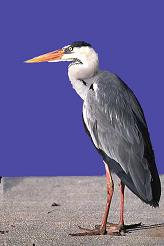
“Is that a grey heron?” said Pat, pointing to a bird 100 metres distant and indeed it was. The problem of recognition at the brightly lit railway station was that the clothes we were wearing for a UK winter were inevitably somewhat different to Seychelles clothes. By contrast, the plumage of the grey heron in the dimly lit garden was identical to the grey herons that are now so common on the east coast of Mahe.
What a remarkable bird. Whereas we humans could not even survive the outside temperatures without warm clothing, the grey heron strode through the frost laden reeds of the near freezing pond to search for its breakfast. It was equally at home here as its cousins in the blazing tropical sun beating down in Seychelles. How amazing it is that this bird has spread throughout the world yet it is not even a migratory species.
When I first came to Seychelles, grey herons were unknown in the granitic islands having been wiped out at a date in history before living memory. Then slowly the odd one would begin to appear now and then. I recall in 1985 having lunch at the Yacht Club and one flew by. Heads turned and one person said, “Adrian, what on earth is that huge bird, I’ve never seen anything like it?” Today, no heads would turn should a grey heron fly past and they a very common sight, even breeding on little Hodoul Island.
What drove these birds to re-colonise the granite islands? Grey herons like many water birds are dependant on the availability of shallow waters to hunt for food. In Seychelles, this means for the most part, tidal muddy areas, but in most of the world, the birds are more common at freshwater sites. The problem with freshwater sites is often that they depend on rainfall and birds are frequently forced to move on in response to rains. It is natural to think that the birds that invaded the granitic islands came from the nearest population in the Amirantes, but perhaps they did not. Perhaps they could even have come from as far afield as Africa or Asia.
In 1983, I was on a yacht sailing from Aden to Seychelles. While right out in the middle of nowhere, hundreds of miles from land, a grey heron flew overhead. It was a strange sight to see in mid-ocean, a bird that needs shallow water such a long way from home. Maybe it had come from Africa and the pools where it had been feeding had dried out. Who knows, maybe even it made it to Seychelles and became one of those first colonisers.