


Marine invasive species – should you be concerned? |14 August 2006
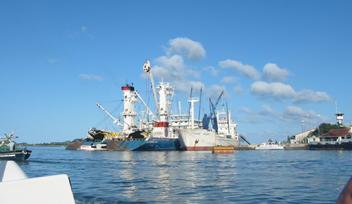
Marine invasive species have been recognised as one of the top threats to marine biodiversity in the world and introduced species have recently been detected in Seychelles’ waters through a joint project with SCMRT-MPA, the Ministry of Environment and the World Conservation Union (IUCN).
Through a variety of detection methods, two introduced amphipods and a species of sponge were detected in the area surrounding Port Victoria. These are believed to have been introduced through international shipping.
Approximately 7,000 species are introduced worldwide through the transfer of ballast water and hull-fouling. In fact 3-10 billion tonnes of ballast water are carried around the world each year. Species such as the zebra mussel and the cholera bacteria have been dumped in new locations through ballast water with devastating effects including costs such as US $60 million per year and 10,000 people deceased in a South American case of cholera.
Since Seychelles is an importing island nation, cargo ships arriving are unlikely to dump their ballast water in the harbours here, instead they will come full of cargo, fill up here and transport ballast water elsewhere. Therefore hull and sea chest fouling is probably the principal vector of transport for introduced species coming to the Seychelles. This is a similar situation to areas of the world like Hawaii, which has 110 introduced species (25% of the total number of species in some harbours), the majority of which were introduced through hull-fouling.
Another similarity is that both locations are biogeographically isolated. This could make Seychelles more vulnerable to invasions because our local species are not likely to have any of these introduced species as natural predators or competitors. Also, the potential decrease in numbers of local species due to coral bleaching and mortality means that new species are more likely to become established. Places with higher species number are less vulnerable as there are fewer niches available for occupation. Not all introduced species will settle in their new environments but those that can reproduce and survive may become established and when they out compete or eat native species they are then invasive.
Once a species has become established it can cause major ecological, economic and social impacts. The introduced species found in the Seychelles are not known to cause serious damage but the effects of these and future introduced species cannot be underestimated.
Caulerpa taxifolia, an invasive algae in the Mediterranean, presently overgrows over 13,000 hectares of seabed, including seagrass meadows, reefs and lagoons that provide habitat to native species. It smothers other species by out-competing them for food and light and causes a reduction in fish catch due to its elimination of natural fish habitats. The invasive comb jelly caused the collapse of the Black Sea Fisheries by consuming zooplankton and fish larvae, costing approximately US $250 million a year.
Cholera caused the death of 10,000 people in South America after it was introduced through ballast water. Luckily the same strain of bacteria was detected in cargo vessels entering the U.S., preventing further global expansion.
Many of these examples of bad invasions have been documented in temperate areas. In Australia it was found that tropical ports had less introduced species than temperate ports, even in areas that were receiving a lot of shipping traffic. One reason for this is that temperate species have longer larval stages and can therefore last longer in ballast water. More information and research is needed on invasive species in tropical areas, which will help us understand the potential threat to Seychelles.
There are a number of management options available to the people of Seychelles to help prevent species introductions, including the control and treatment of ballast water exchange and hull-fouling practises. All of these options should be geared toward prevention, the best way to stop invasive species from becoming a problem. Therefore, international and regional cooperation is essential to tackle this problem which straddles national boundaries. Let’s keep the beauty, health and productivity of the Seychelles marine waters intact for generations to come.
For more information and to find out how to join in the awareness campaign log on to the website http://www.iucn.org/themes/marine/invasives/coralreefs/seychelles