


Doping control in Seychelles sports-Doping still an issue here |24 December 2007
Seychelles is therefore slowly waking up to the fact that, after years of hearing about
Compared to 2006 when 61 positive cases were recorded in a total of 429 tests done between May 12 and November 25 in five sports, the Seychelles National Anti-Doping Commission (SNADC) registered a decrease in the total number of offenders this year (from February 19, 2007 to December 1, 2007).
In fact, 763 tests were done in 11 sports – athletics, basketball, boxing, cycling, football, handball, judo, karate, tennis, volleyball and weightlifting – and 48 athletes returned positive results.
Of the 48 positive cases, four are repeated offenders. Three athletes tested positive for opium but they proved that they were on medications to treat their illnesses. Because their medications fall under the World Anti-Doping Agency (Wada) prohibited list, they were given a Therapeutic Use Exemption (TUE), meaning that they could continue taking their medications without being banned. The number of negative cases is 715.
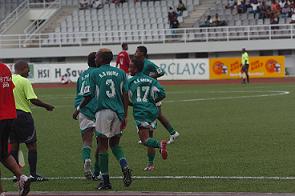
Like last year, football is the sport to have the highest number of tests – 322 (all male players) registering 36 positive cases including four repeat offences. The total number of negative cases in football is 286.
With 189 tests, volleyball is the sport with the second highest number of tests - 89 males and 100 females – and there are three positive cases, all of them male players.
Basketball recorded four positive cases – three males and one female – in a total of 131 tests – 97 males and 34 females.
Of the two male athletes banned in athletics this year, one refused to take the test out of the total of 43 – 26 males and 17 females – tested. Boxing, handball and weightlifting recorded one positive case apiece.
Most of the offenders were caught using recreational drugs like cannabis and marijuana and opium.
Of the 48 positive cases, 40 athletes – 39 males and one female – were caught using marijuana. Six – five males and one female – tested positive for opium, while a total of five males refused to take the test.
It is to note that although the number of positive cases totals 51, there are three TUE (Therapeutic Use Exemption), all coming in the opium bracket.
The four sports which did not record positive cases this year are cycling, judo, karate and tennis although 31 sports are practiced in Seychelles.
It is worth noting that football was again the sport with the highest number of tests in 2006 – 193 registering 34 positive and 159 negative cases.
Of the five other sports – volleyball, basketball, handball, cycling and athletics – only athletics did not record any positive cases. Volleyball recorded 12, basketball 13, handball one, and cycling one.
Eradicate drugs in our sports
Earlier this year, SNADC chairman Jean Larue said he was confident in the work being done to eradicate drugs in our sports.
He noted that although it was tough at first for sportsmen and women, team managers, coaches and chairpersons of sports federations and associations to accept the fact that doping control had become part of the day-to-day running of sports here, the situation has changed for the better.
Most people involved in sports here now understand the message as team managers, chairpersons of sports federations and associations ask for tests to be done on all their players. Even before acquiring new players, teams find it necessary that these possible recruits take a doping test. Some teams also inflict added punishment on their players who test positive.
The period of ineligibility set out by the SNADC for athletes who test positive varies. For a first violation, an athlete is banned for six months, a second violation a one-year suspension, a third violation a two-year ban and a fourth violation will be punished by life-time suspension.
The fact that some athletes could be taking masking agents to minimise the chances of them testing positive, sophisticated tests are expected to be done in the future. The results coming from overseas laboratories will be forwarded to the World Anti-doping Agency (Wada) who will in turn inform the international federations of the outcome.
As is common practice all over the world, targeted tests and out-of-competition tests – in training, at the athletes’ homes and athletes being notified in advance to report to a certain place to do the tests – are expected to be done too in a effort to eradicate drugs in Seychelles sports.
G. G.