

Capacity-building in soil and water management - Four return from study tour in Sri Lanka |26 August 2016
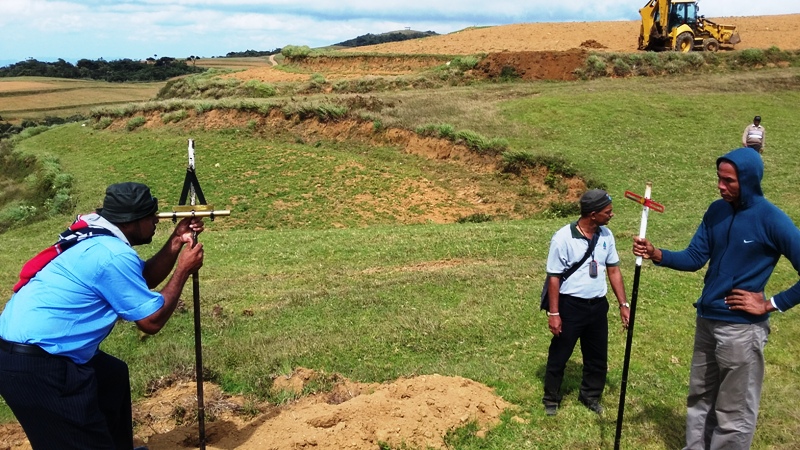
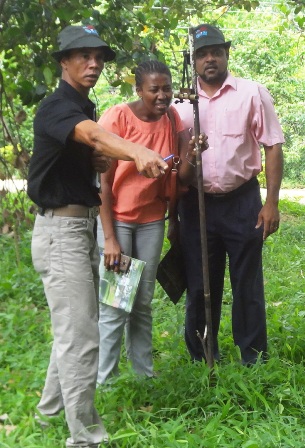 Two lecturers from the Seychelles Institute of Agriculture and Horticulture (SIAH), a local consultant of the Food and Agriculture Organisation (FAO) as well as an extension officer from the Seychelles Agricultural Agency (SAA) recently had a chance to experience terrace farming technology which is widely practiced in the hills of Sri Lanka.
This was during a study tour organised as part of the FAO capacity-building project on soil and water management conducted here last month. The tour was organised in collaboration with the Natural Resources Management Centre, Department of Agriculture, Peradeniya, Sri Lanka.
The main objective of the 10-day tour was to get the group to better acquaint themselves with this type of farming and the technology being applied mainly on hilly areas and in weather conditions similar to that of Seychelles.
The group also had the chance to attend both theory and practical sessions as well as presentations on contour and terrace farming in Sri Lanka and widen their knowledge on soil fertility management, soil conservation and land management in terrace farming. They also learned how to construct terraces.
The joint project between the government of Seychelles and the FAO aims to mitigate the problem faced by the farming community here during heavy rainfall which result in floods on low lying farmlands and erosion for those on the hilly areas.
This will be followed by another training which will take place in September this year during which the group will impart or share knowledge acquired during the study tour to their local counterparts and eventually to the farmers and students of the SIAH.
One of the participants of the tour said the knowledge acquired is very useful and will definitely help him to better discharge his responsibility as a lecturer at the SIAH. It is hoped he will transfer the knowledge acquired to the future generation of farmers and hence help boost the national agricultural production.