


Flat screen craze in Seychelles! |05 September 2013
“They’re chic!” “They’re posh!” “They provide lots of screen space to view a movie.” “They simply look extravagant and elegant in one’s living room.” “They have a look that catches attention, that attracts you to them,” are some of the comments from viewers referring to flat screen televisions.
“I can play my downloaded movie on them,” says Terry from the School of Advanced Studies (A Level). But Ivan, who is following a three-year Diploma Course in Telecommunications and Electronics at the Seychelles Institute of Technology, is more technical in his description. “One must pay attention to the resolution of the LCD – the idea is to get a higher contrast ratio and I for one would not settle for a 1000.1. I would prefer a sufficient amount of HDMI cable input for my various gadgets like laptop, smart phone, USB stick and my MP3 player.” HDMI is a type of digital connection that's capable of transmitting high-definition video and high-resolution audio over a single cable.
He says he would also prefer hooking up separate surround sounds.
These are some of the comments from locals regarding the flat screen televisions in Seychelles. The more recent are LED-LCD while those before are just Plasma. We shall know more on these two types of flat screen TV further down in our article.
In a recent walk around town to various flat screen distributors it came out clearly that Seychellois are buying flat screens like hot cakes. When considering the prices of a large-size screen, one would think it’s a liability to consumers but that is not really the case.
“They sell well and we even accept payments by installments from certain reliable clients. Some can even pay three quarters of the price at first go but generally consumers pay the full amount at once,” said the sales lady at Samsung, Orion Mall – one major distributor of such brand in Seychelles.
Various sizes are sold as it all depends on the location in which the customer is going to have them installed. “For example if you have a large living room you might as well go for the large screens to maximum size of 60ins. But if it’s going to be used in a bedroom for example better go for the smaller ones,” said the sales lady.
She also said there are even companies who buy them for security purposes. They have their surveillance camera attached to them to watch the goings-on on their premises on its screen.
Asked whether consumers get any problems with these flats screens where they have to return them, it was pointed out that the main issues raised are that people are not using or installing them well by either not connecting their various gadgets properly or to the right ports.
“We offer a guaranty of 18 months and an after sales service. This proves our products are of highest quality and of great standards,” said Samsung – Orion Mall.
In Seychelles we have various main distributors for different brands. There are Samsung – Orion Mall, Le Chantier, C&A Trading and Eden Plaza. Lifestyle deals mainly in Sharp (Aquous) and Sony (Bravia); Good Luck Trading in the LG brand; Kim Koon in Panasonic; Dhanjee in mainly Sony (Bravia) and LG and 2000 Electronics at Orion Mall in Philips. But all these brands are found in various other shops around Mahé.
It is also clear that when shopping for a flat screen HDTV, a consumer is quickly confronted with a big question: Plasma or LED-LCD?
Plasmas, and their HDTV rivals, LEDs, use slightly different methods to create images on the screen. Plasma HDTVs use precise amounts of electrical charges applied to minute gas plasma cells and the result is emitted light.
What can be confusing to first-time buyers is that there are two versions of LCDs, and they act slightly differently because they are based on slightly different technologies. An LCD, or Liquid Crystal Display, uses LCD for the screen but it does not illuminate, so it uses a different light source, backlighting.
Some technical details to help the consumer make a better choice:
Quality
At first plasma appeared to have a clear advantage in terms of image quality, but as it always happens, rival technologies have continually narrowed the gap. Originally the native colors in plasma looked best but as backlighting technology got more refined, so was the image that they could show, as well as the fine details encased in that image. So you might be wondering: Which is better, LCD/LED or plasma? There really is no simple answer as they can vary from product to product. Companies develop special technologies that they include to help differentiate their offerings and to your eye (and mine) this might make a difference…or it might not.
Longevity
One area that plasmas have caught up to LCD HDTVs is in the area of longevity. At one time the LCD camp had a 3 to 1 or greater lifetime on the displays. Over time, the plasma faded, and initially that was around 20,000 hours. Now it is pushing beyond the 60,000-hour mark so they are now becoming on a par with each other.
Why we call them LED-LCD and not LED TVs
LED TVs are just LCD TVs that use a LED backlight instead of a fluorescent one. LED-LCD TVs generally have better contrast and more accurate colors than fluorescent-backlit models, and the LEDs are also very energy efficient. LED backlight creates bright, high-contrast images.
Nearly all LCD TVs from major brands use LED backlights, except for very basic models and TVs designed for outdoor use.
Plasma
Pros: excellent contrast and black levels; effortless motion; uniform illumination over the entire screen area; good picture depth; often priced lower than LED-LCD models with similar screen size and features
Cons: Some models not as bright as most LED-LCD TVs; not as energy-efficient as LED-LCDs and typically generate more heat; a plasma panel is usually a bit heavier and thicker than an LED-LCD panel.
LED-LCD
Pros: models with advanced local dimming backlights can have black levels rivaling plasma; LED-LCD panels are thin and lightweight — especially models with edge-lit backlights; this is the most energy-efficient display technology.
Cons: picture may look a bit flat and less "film like" than plasmas; when viewed off-axis the picture may lose some contrast and color. According to a customer review, a LED-LCD screen is not recommended for a room which is quite large from an angle more than 45 degree or so, you will not be able to see anything on the screen. However, an LCD TV is worth having if you are keeping it in a bedroom or other smaller rooms. For a large room you should look for a plasma TV. What do you think?
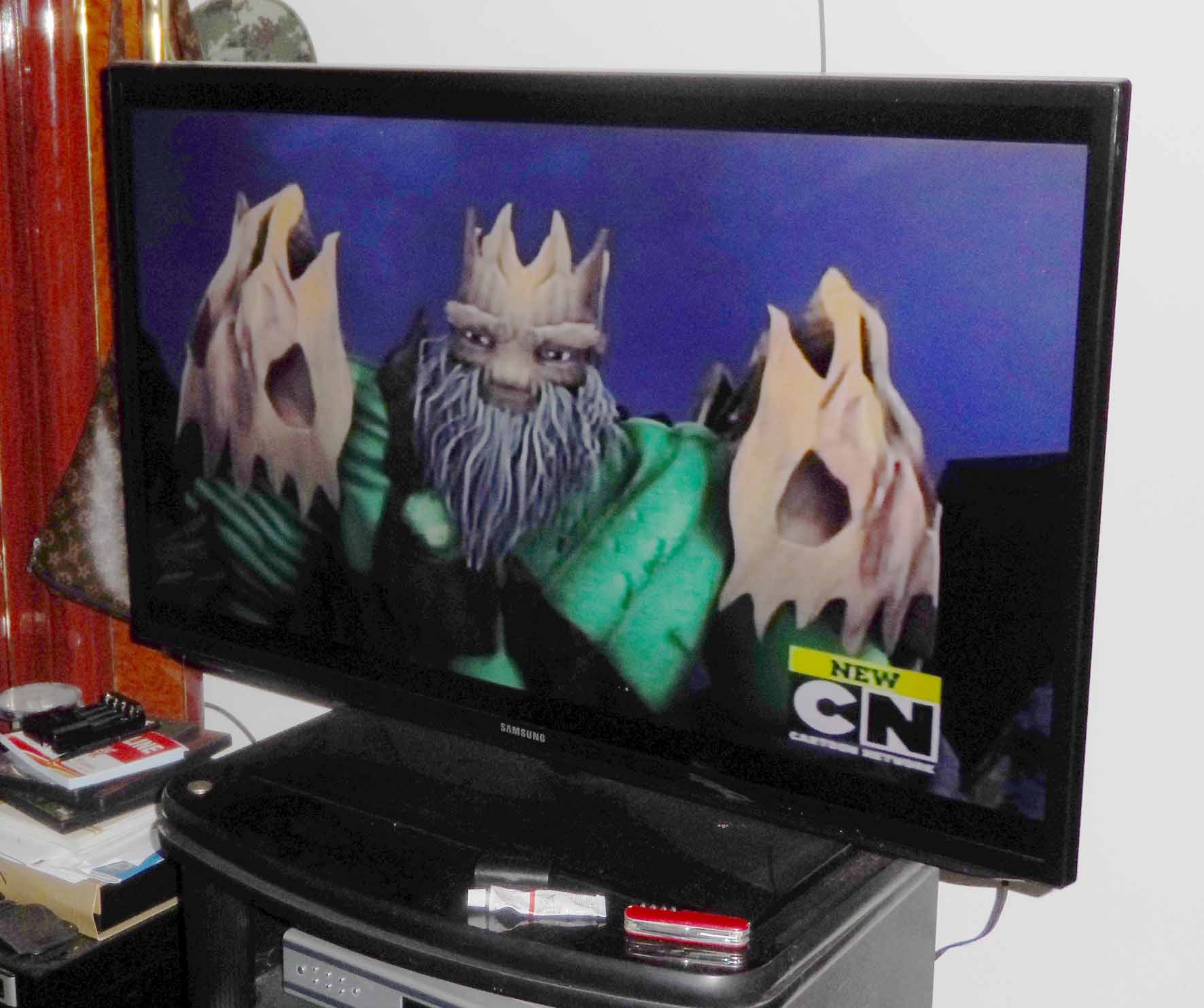
Flat screen televisions are seen in many Seychellois homes nowadays