


New schemes of service-All health workers to benefit |05 May 2006
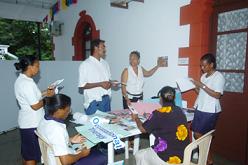
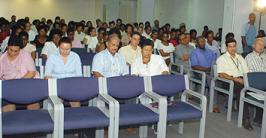
They were launched during a health management meeting, chaired by Health Minister Vincent Meriton, at the International Conference Centre on Thursday May 4 to take effect as of January 1 this year.
Giving details about the new schemes, Marie-Claire Marie, the director general of Corporate Services, said they stemmed from recommendations made by a working group set up in May last year to revise the existing 12 schemes of service.
She said the review was carried out in consultation with representatives of the cadres concerned to ensure that, as far as possible, the schemes responded to the aspirations of all health workers.
"This resulted in the introduction of 10 additional schemes, bringing the total number of schemes of service to 22," she explained.
Among the 22 health cadres covered by the schemes, are environmental health officers, mortuary assistants, field assistants, physiotherapy, occupational therapy, bio-medical laboratory technicians, bio-medical engineers, pharmacists, pharmaceutical technicians, radiographers, nutritionist, nursing, health care assistants, dental therapists and technicians.
Mrs Marie said that each of the schemes provided for a clearly defined career structure to attract and retain suitably qualified and competent personnel, well-defined job descriptions with clear delineation of duties and responsibilities at all levels, to enable personnel to understand the requirements and demands of the job.
According to Mrs Marie this change will also have an impact on the salary bands of employees in their respective fields.
She said the schemes also provide standards for recruitment, training and advancement within the career structure on the basis of qualifications, merits and ability as reflected in work performance. New criteria have also been set with regard to career advancement to enable staff to move to higher positions, while new performance indicators have also been introduced to better measure staff performance prior to remunerating them.
The different allowances allocated to staff have been revised and in most cases increases, ranging between R100 to R300, have been made to meet the demanding working conditions of health staff.
For example the scheme for environmental health officers makes provision for an inducement – which they were not previously receiving – which varies between R400 to R700 per month. The same applies for field officers who are normally on the forefront of an epidemic outbreak such as spraying of mosquitoes and also for rat elimination. They will now be getting an inducement of R500.
Allowances in question included rotating shift, inducement, on-call, night shift and night duty and the rates vary from service to service.
Mrs Marie said that to fund the schemes around R1 million has been made available in the health budget.
The schemes are being implemented in three phases, starting with payment of allowances to be backdated to January 1, the second phase will see the re-adjustment of posts and the third will see payment of gratuities.
Mrs Marie said payment of gratuities for all health workers, excluding nurses, will now start with R20,000 for the first 10 years, instead of first 15 years as was the case before.
With regard to nurses, for the first 10 years, their gratuity will amount to R30,000.