


Do you know what is salmonella? |11 April 2013
In a recent news report on the national television on Bazaar Victoria in town, the issue of meat especially poultry not being very well-cooked was raised among other topics of discussions. Consumers at the Bazaar have been complaining that grilled or barbecued meat, especially poultry, were not being properly cooked and they were still raw in the centre.
Relating to that a health official who visited the Bazaar advised vendors there against such practice and poultry meat has even been banned there for this reason. The official cited the risk of the public catching salmonella from consuming such uncooked meat.
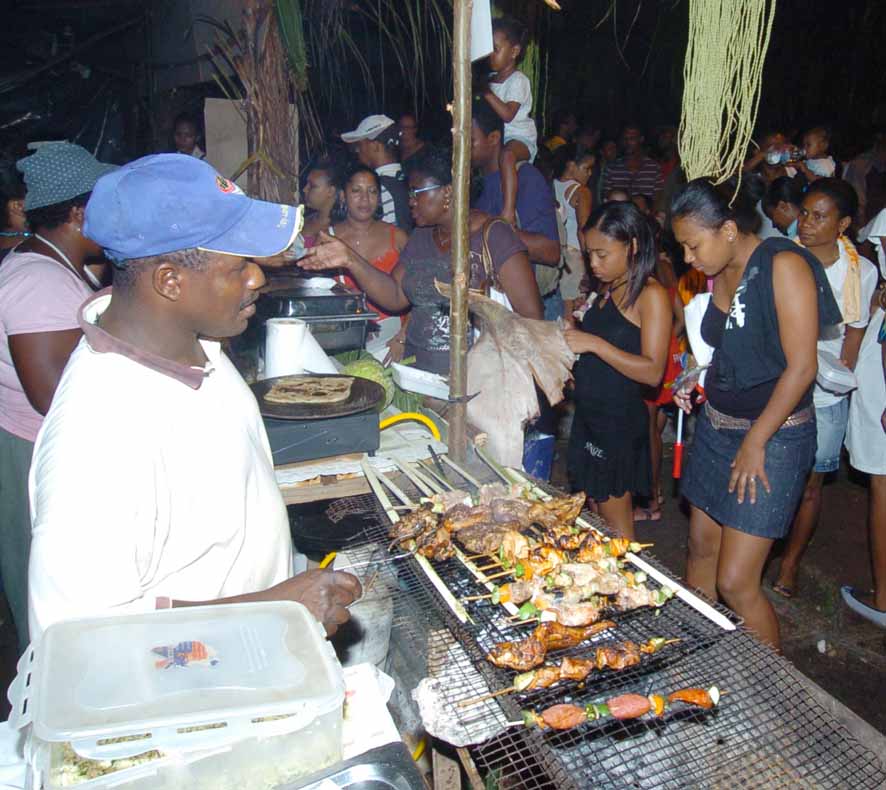
A Bazaar vendor selling kebabs. Meat should be well-cooked to prevent salmonella infection
Do you know what is salmonella? Today we publish a short explanation of the disease to promote awareness.
Salmonella is a type of bacteria. There are many types of salmonella bacteria, but the type that commonly causes food poisoning is known medically as non-typhoidial salmonallae, which lives in the intestinal tracts of humans and other animals. It typically causes illnesses in humans when it is transmitted through foods contaminated with animal or human feces.
How Do You Get Salmonella?
Most people associate salmonella infection (salmonellosis) with raw or undercooked poultry or meat, but it can be found on fruits and vegetables that are not cooked or washed properly as well. A food handler may also spread salmonella to foods if they do not properly wash their hands after using the bathroom.
Salmonella may be found in the feces of some pets, especially those with diarrhea. Reptiles such as turtles, lizards and snakes are the most likely pets to be carrying salmonella.
Symptoms of Salmonella
The symptoms of salmonellosis are similar to those of a stomach virus. They include
- Diarrhea
- Fever
- Stomach cramps
-Vomiting (occasionally)
If you become infected with salmonella, these symptoms typically appear between 12 and 72 hours after exposure to the bacteria. They usually last between 4 and 7 days and resolve on their own without treatment.
Occasionally -- especially in infants, the elderly or those with compromised immune systems -- a more serious illness may result from salmonella infection. Diarrhea may become so severe that the person needs to be hospitalized. The bacteria can also get into the bloodstream and cause death unless the person is treated quickly with antibiotics.
How is Salmonella treated?
Usually, no treatment is necessary for salmonella other than staying hydrated. Drinking plenty of water or an electrolyte solution (such as Pedialyte for children and infants or Gatorade for adults) is important when you have diarrhea to be sure you do not become dehydrated. Fruit juices and sodas should be avoided because they can possibly make the diarrhea worse. Some people may need antibiotic treatment.
If you suspect that you have a salmonella infection after eating food that may have been contaminated, it is important to see your health centre. They can do tests to determine if salmonella is the cause of your symptoms and can report the Occasionally, diarrhea may become so severe that it causes dehydration and IV fluids may be necessary. Antibiotics are typically not necessary unless the bacteria enter the bloodstream.
Are there any complications?
Normally, there are no serious complications from a salmonella infection. Rarely, people who have had salmonellosis can develop Reiter’s syndrome which may also turn into chronic arthritis. Symptoms of Reiter’s syndrome include pain in the joints, painful urination and irritation of the eyes. Treatment with antibiotics does not appear to affect whether or not a person develops these complications.
How can salmonella infection pe prevented?
Because salmonella is in the environment and even in our own bodies, it is important to follow some basic steps to prevent infection with the bacteria. Some things you can do include:
- Do not eat raw or under cooked eggs, meat or poultry. Egg yolks should be cooked until firm and meat (especially ground meats) and poultry should not be pink in the middle.
- Do not consume raw or unpasteurized milk or dairy products.
- Thoroughly wash all produce.
- Keep uncooked meats separated from produce and other foods so cross contamination does not occur.
- Thoroughly wash all cutting boards and food preparation materials after preparing uncooked foods.
- Wash your hands before you handle food and between handling different food items.
- Always wash your hands after using the bathroom and touching pets, especially reptiles.
- Never keep reptiles (including turtles) as pets in the same house with infants and young children.
Wash your hands immediately after touching