


Island adventure reinforces conservation message |27 November 2006
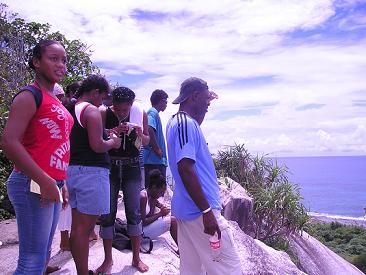
The students from Plaisance Secondary School and Grand Anse Primary School were rewarded with the trip to the two islands as winners of a poster competition for members of the Wildlife Clubs of Seychelles.
The winning posters – Tir disab lo lans i fer lerozyon and Pa zet salte dan lanmer from the Grand Anse school group and “What can you do to help?” and “Rich Biodiversity Equals Healthy People” from Plaisance – will be put on display at the soon to be opened Cousin-Cousine run Island Conservation Centre, Praslin.
The Wildlife Clubs’ trip to the island and the Island Conservation Centre have been funded by the Global Environment Facility (GEF), project implemented by Nature Seychelles and Cousine Island under a programme designed to build links between the NGO and privately owned island.
Both islands are dedicated to conservation and have been instrumental in saving a number of birds – notably the Seychelles Warbler and Magpie-robin – from extinction through carefully managed tourism initiatives.
A four-villa luxury resort on Cousine funds the island’s environmental work, while over 10,000 half-day tourist visits to Cousin annually bring in the money Nature Seychelles uses to run operations on the island and fund other conservation projects back on Mahé.
Leader of the Plaisance School Wildlife Club and Wildlife Clubs Secretary Lyndy Bastienne Corgat described the visit as a resounding success.
“The students benefit tremendously from seeing the lessons they learn in the
classroom but into practice during their visit to Cousin and Cousine. It allows them to gain a better understanding of the work that the Cousine management and Nature Seychelles staff are carrying out to safeguard endangered species,” she said.
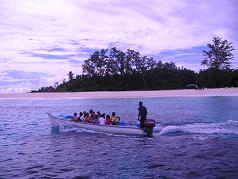
The poster prize winners’ trip saw the students’ day start with a boat ride from Mahé to Cousin, where they were guided around the island by two of the Cousin Wardens and introduced to some of the plants and animals unique to Seychelles’ small islands.
After leaving Cousin the students were shown around Cousine, a privately owned island dedicated to environmental conservation.
“From Cousine’s perspective the visit of so many enthusiastic students from the two schools as well as the Wildlife Club leaders was a resounding success. We now look forward to developing a collaborative working relationship with the Wildlife Clubs of Seychelles, hopefully to the benefit of both the environment and the two organisations,” said Cousine’s ecologist, Dr Dylan Jones.
“The two islands presented the students with two different models for successful small island nature reserves. It was a good experience for the students to look at different ways of balancing the financial, tourism and, of course, the environmental needs of an island reserve,” said Ms Bastienne Corgat.
Contributed by Nature Seychelles