


From unhappiness to happiness-The story of a Seychellois of Chinese origin |03 February 2007
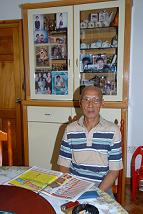
Born in Canton, China on February 16, 1936, François Dang Kow, better known to everyone as “Kow,” came to Seychelles about 55 years ago from Bombay, at the young age of 15, with nothing – not even a passport – to meet his father who was already working here. He was not carrying baggage whatsoever but what he possessed in terms of his determination to succeed made up for it. Today, everybody in Seychelles remembers “Kow” for his famous restaurant, “King Wah,” at Benezet Street. He no longer runs the place, which he rented for 25 years, but is now happily retired.
This does not prevent him from keeping an eye on his two shops, one at Grand Anse Mahé and one in Victoria at Market Street. Family members run both shops.
Seychelles Nation: What brought you to Seychelles in spite of the fact that none of your parents were Seychellois?
Dang Kow: My father had come to settle in Seychelles a few years back, to escape the turmoil of the Second World War, leaving my mother, sister and me in China. Life was hard at that time, because of the war, so I left Canton and travelled to Hong Kong by train, to seek work. It was while I was in Hong Kong, barely managing to survive, that some Chinese elders advised me to come to Seychelles. Since my father was already there, I therefore decided to follow him. I had only a stamped official document to prove my identity. I remember clearly that it took me 52 days from Bombay in a small boat to reach here.
Seychelles Nation: What happened when you arrived?
Dang Kow: I was able to find my father and I went to live with him at Pointe Larue. I worked with him, at Adam Moosa, where I counted the coconuts that were being brought in by the planters to be turned into copra. My father fed me but did not see the need to pay me anything.
Seychelles Nation: Were you happy, working just to stay alive?
Dang Kow: Not at all. I started looking around and when a Chinese elder wanted to rent me his shop and sell me the stock at Grand Anse. I grasped at the opportunity. I started making local sweets (sikdorz), chilly cake, selling cigarettes and peanuts. I had to walk to town, via La Misère, to buy my provisions. I even sent a man on a bicycle to sell my commodities in other districts. Owning a bicycle and a pair of canvas shoes in the 60’s was considered as a luxury. Every morning, I had to get up at four and baked bread and cakes till 9 a.m., to have everything ready on time. I was working so hard to the point that my health got affected.
Seychelles Nation: Did you rest to preserve your ailing health?
Dang Kow: Oh no, I explored other avenues. I started, with a business partner, running the Bamboo Night Club in town. We bought a band to play in the club, because at that time, there was not enough entertainment in town. We had sailors from the American or British corvettes. The band would also play in the different social centres in the districts. To attract more clients, I would tell the person in charge of the dance hall to let people in for free after a certain time. By then, I was also the proud owner of a pick-up, and during the day I would transport fish for fishermen after they had landed their catch around the island. The fish was sold in the districts.
Seychelles Nation: Tell us about the famous King Wah of Benezet Street (King Wah is derived from the name of a famous restaurant in Hong Kong, meaning, “good atmosphere.”)
Dang Kow: It was in 1975 that I rented this place. I had gone for three months in Hong Kong to learn more about Chinese food. I introduced eight types of food, such as sweet and sour pork, chicken, beef and chicken chow mein, including a speciality under the name King Wah Chicken. It was with apprehension, that I launched this business venture, knowing that business was slow in Benezet Street at that time. The place was yet to be developed. I used to give taxi drivers free takeaways so that they would bring customers (mainly tourists) to my place. I also contacted some travel agents in town and they would send in customers. The rest is history. After a successful 25 years, I gave up the business in 2000.
Seychelles Nation: You are married and you also have five children. How did you meet your wife?
Dang Kow: I have always been told I am ugly – “Kow, ou vilenn” – this sentence marked me, when I was growing up and I accepted it. As you can see I have one eye that is damaged and there are long scars of healed open wounds on my body. During the war I was hit by flying splinters from a bomb that was dropped on the village, where I was living when I was six. I do not know how it happened except that when I recovered in the hospital bed, I had lost one eye. I really, therefore, found it difficult to approach girls, but when I was going around the shops in town to buy my provisions, I saw this girl working in Leong Thion in Market Street. We started talking and she told me that her name was Antonia, and that the owner of the shop was her uncle. As we talked, I told her that even though I was considered ugly, I had a good business sense and would really make her happy. She smiled and things went on from there. Later on when I met my in-laws, who lived at Anse Etoile, they were very happy for us to get married. I became a Catholic and we got married in the Cathedral of the Immaculate Conception, when I was 28.
My first child was a son and he was born a year after the wedding. At that time I was still renting the place at Grand Anse. The owner wanted to sell it and the plot of land for R125,000. In the 60’s this sum was considered a lot of money. I approached the banks for a loan, but they refused to grant me one. A Chinese elder was willing to lend me the money. He trusted me since I did not have to sign any documents but he knew all along that I would repay the debt.
Seychelles Nation: How would you describe your life today?
Dang Kow: I have four sons, one in Hong Kong, one in the United States others are running the family business, and my daughter is a nurse. There is never a day that goes by that I do not remind them that in life you need to work hard. ”Pa per pour travay, fer parey papa,” I usually add.
Seychelles Nation: Have you ever gone back to China?
Dang Kow: I went back in ’76 to see my sister, who is still living there. She’s 76 years old.
Seychelles Nation: How do you look at the arrival of the Chinese President?
Dang Kow: I think that his visit will be a boost for the Chinese community and also for the Seychelles as China is now considered as one of the most powerful countries in the world economically.
Seychelles Nation: ”Tieh,Tieh,” (meaning, “Thank you” in Chinese.).