


SHTTC launches series of motivational talks for students |17 March 2007
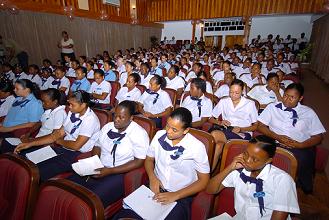

Launching the series of talks last week, the director of the college, Flavien Joubert, said they have been initiated because it has been observed that many graduates are not joining the world of work in the field of hotel and tourism, in which they received their training, but opt for work in other fields.
“This causes the industry to lose out on benefiting from the well trained manpower that would otherwise bring in great contributions for the country as a whole,” he said.
“Every day, loads of vacancies in the hospitality industry can be seen on television. It is still difficult to find willing graduates of the SHTTC to fill all these vacant posts and in many cases we have to resort to the recruitment of expatriates,” Mr Joubert said.
Seeing it as his duty to reverse this trend, Mr Joubert decided to call in a number of partners in the hotel and tourism industry from around the country to assist in developing what he termed as “an effective mechanism to get as many graduates as possible to work in the field that they have been trained for.”
The first in these series of talks saw presentations by several individuals from various key organizations. They included the director of Care, Robert Ah-Weng, who talked about self empowerment; the principal secretary for Youth, Alain Volcère, who elaborated on this year’s national theme; the Human Resources manager at Paradise Sun, Praslin, Elsia Simeon, who shared her expertise on careers in the hospitality industry; and the director of the Drug and Alcohol Council, Benjamin Vel, who highlighted the negative effects of alcohol and drug abuse.
Mr Joubert noted that two main causes preventing the college’s graduates from taking up employment in this particularly demanding industry have been identified.
The first deterrent is the unsociable hours that are involved in this line of work. Many former students decline to work within the hospitality industry because they feel that the hours of work do not leave much time for socializing with friends. A large number of them leave the industry very early on to seek 8-to-4 jobs that do not involve working shifts, weekends and public holidays. He said this happens despite the fact that students are made aware of the demands of the hotel industry when they follow career guidance sessions in secondary school.
He named peer pressure as another significant contributing factor. Many new graduated students have second thoughts when they see their friends in an 8-to-4 job and they want to do the same.
“When students go on work attachment, sometimes they are given the same duties and responsibilities as employees of the institution instead of as trainees. And when an incident happens, they are held responsible as any other employee would have been and this causes them to become de-motivated,” Mr Joubert said.
He said that the individuals at the workplace where students are placed should remember that these students are supposed to be undergoing a learning experience and therefore should not be treated as fully fledged employees with countless responsibilities.
The director of SHTTC said that he will personally liaise closely with the hotel industry to make sure that the purpose of work attachment is not defeated. He hopes to be able to convince hotel owners and managers to provide a springboard for these trainees to enter in the industry and make a career.
Mr Joubert said that he plans to invite many other speakers from all sectors of the tourism industry, including representatives of airlines, hotels, among others, to deliver motivational talks to the trainees.