


The nutritional value of local root crops |13 October 2007
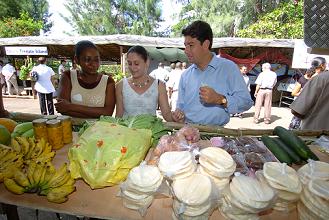
This year’s local theme of the World Food Day, “Healthy Food for All, for the Love of Seychelles,” highlights the right for everyone to have regular access to sufficient, nutritionally adequate and culturally acceptable food for an active and healthy life.
In Seychelles, there is a variety of local foods that are customary to our culture, namely root crops, coconuts, green leaves, local fruit and fish. Seychellois have experienced many changes in lifestyle, including a transformation in diet. These have brought about a reduction in the consumption of traditional foods and an increase in the consumption of imported convenience foods. The vast biodiversity of local food crops represent an asset that is sadly underused.
Root crops are plants that are cultivated for their swollen edible root. The major root crops available in Seychelles are taro, yam, cassava and sweet potatoes. Although they are not root crops, breadfruit and plantains are placed in the same food group as they all have fairly similar nutritional properties. Root crops are second in importance only to cereals as human food.
The principal nutrient supplied by such foods are carbohydrates which are essential nutrients as they syupply the primary energy source for the body. Between 50 to 55 percent of our total energy should come from this nutrient. Once our staple food, the consumption of root crops, breadfruit and plantains have gradually decreased over the years despite their superiority over other starchy foods, namely white rice which is highly refined and as a result have lost most of their nutrients. Root crops, breadfruit and plantain are made up of approximately 60 to 90 percent carbohydrates in the form of starches, sugar and fibre. The role of fibre is well documented and has aroused a lot of interest in recent years. Increased fibre consumption is associated with a reduction in certain diseases, including diabetes, heart diseases, colon cancer and various digestive disorders. Moreover, the fibre is known to prevent constipation by absorbing water thus producing soft and bulky stools.
The protein content and quality of root crops, breadfruit and plantains are variable. Although not major protein sources, yam and potato have the highest protein content amongst all these starchy crops. Not considered as protein-rich foods, root crops need to be consumed alongside rich sources of protein in order to make the meal more balanced.
All the root crops have very low lipid content, with the highest being sweet potato which has about 2.7 percent fat. This makes them low in calories and can therefore form part of a low fat diet, taking into consideration the cooking method. Since root crops are low in lipids, they are not therefore rich sources of fat soluble vitamins. On the other hand, vitamin C occurs in substantial amounts in several of the root crops. When correctly prepared, root crops can make a significant contribution to the vitamin C content of the diet. Most of the root crops contain small amounts of the vitamin B group; however their leaves – those which are edible – can also be good sources.
Potassium is the main mineral found in most root crops while sodium level tends to be low. This makes some root crops particularly important in the diet of patients with high blood pressure, where sodium limitation is indicated. However, high potassium foods are usually restricted in the diet of people with renal failure. In addition, root crops, breadfruit and plantains contribute a variety of other minerals namely zinc, manganese, phosphorus and iodine.
Root crops, breadfruit and plantains are foods that can play a valuable role in helping to maintain good health given their numerous health benefits and their versatility. It is recommended that rice be replaced with these locally grown starchy foods at least three times a week for good health.