


Seychelles readmitted into SADC |18 August 2008
• The readmission of Seychelles into SADC
• The official launching of the SADC Free Trade Area (FTA)
• The political situation in Zimbabwe
• Regional economic integration issues
SADC is a regional organization which now comprises 15 member states from the Southern African region. The organization was initially established as the South African Development Coordination Conference (SADCC) in 1980 and was transformed into SADC on August 17, 1992. The main objectives of the development community are to promote and defend peace, security and stability and through regional integration it aims to achieve sustainable development, economic growth and the eradication of poverty in order to enhance the standard and quality of life of the people of the Southern African region.
Readmission of Seychelles into SADC
Seychelles joined SADC in September 1997; however, in June 2003 the country was forced to withdraw from the regional organization due to financial and human resource constraints. In 2006, with a more proactive diplomatic policy, an improved economic environment and following an in depth analysis of the potential benefits of re-joining SADC, Seychelles expressed its willingness to re-join the development community.
It was felt that with Seychelles sharing historical, cultural, economic and geographical affinities with the countries in the region, the country’s membership would complement the organization and thus help to strengthen and boost political and socio-economic co-operation in the region. On Saturday, August 16, the Johannesburg SADC Summit unanimously approved Seychelles re-admission into the community.
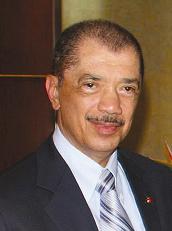
President Michel expressed his gratitude to SADC and “especially those who have helped Seychelles rejoin the fold of the great community of SADC”.
The President said that Seychelles’ re-admission into SADC would widen mutual trade and investment opportunities.
“Though we may be small we shall endeavour to play an active and supportive role within SADC, and contribute in whatever way we can to further its objectives, especially in areas where we feel that we have ourselves made significant progress – for example in the domain of fisheries, sustainable tourism, and protection of the environment,” said the President in his remarks.
Launching of SADC’s FTA
SADC's main goals are to form common political interests and support greater trade and investment flows between members. The SADC Free Trade Area (FTA) is key to achieving these goals. With twelve (12) of the fifteen SADC Member States already in the FTA, the SADC FTA was officially launched yesterday, August 17, at the Johannesburg Summit.
The SADC FTA creates a regional market worth US $360 billion, with the SADC region as a whole representing a cumulative Gross Domestic Product (GDP) of US $431 billion and a total market of 247 million people (with a total population of 170 million currently in the FTA) and includes economies growing by up to 5% a year.
Political situation in Zimbabwe
President Robert Mugabe of Zimbabwe and President Thabo Mbeki of South Africa briefed the Summit on the status of the power sharing negotiations taking place between the parties involved in Zimbabwe’s political stand-off. Heads of State reaffirmed their commitment to helping all the parties concerned to reach an agreement that corresponds to the aspirations of the people of Zimbabwe.
Commenting on the situation in Zimbabwe, President Michel told the Summit that he was happy to note that the political leaders of Zimbabwe were working towards a political agreement that puts the interests of the people of Zimbabwe above partisan considerations.
“On behalf of all Seychellois”, he said, “I wish to congratulate all involved in the negotiations, and I wish Zimbabwe and all Zimbabweans every success in together rebuilding their great country”.
Regional economic integration issues
The SADC regional integration programme includes the establishment of an FTA, a Customs Union in 2010, a Common Market by 2015, a Monetary Union by 2016 and a single currency by 2018.
The regional integration process began in 1996 with the signing of the SADC Trade Protocol.
The main objectives of the Protocol are to promote regional trade by removing all barriers to trade through the harmonization of custom duties and procedures. The process was further enhanced in 2000 when the implementation of the SADC FTA was kick-started with the ultimate goal of ensuring that all goods are traded duty free between SADC member states.
The 2008 SADC Summit noted the status of the regional integration process, namely the challenges relating to the overlapping membership of SADC member states to other Regional Economic Communities (RECs), namely COMESA (Common Market for East and Southern Africa) and EAC (East African Community).
Discussions also focused on the economic and trade liberalization and regional trading arrangements between the other RECs and SADC.
The promotion of the movements of people among the various RECs was also discussed. It was agreed that there should be joint implementation and co-operation in infrastructure development in support of regional integration between the RECs of the region namely COMESA, EAC and SADC.