


ISLAND CONSERVATION-Insects and other creatures help to … clean up the world |22 September 2008
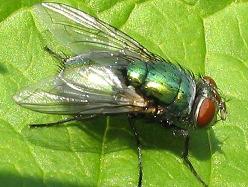
We humans are having it relatively easy with collecting plastic bottles, empty juice packets and bits of scrap metal, while they attend to all the dead animals – and animal droppings – that otherwise would accumulate in the environment.
Just think about it: the countryside would be littered with dead tang, not to mention droppings of all sorts, if efficient little scavengers like those metallic green flies known as greenbottles were not around. Some beetles feed as adults on such dead organic matter. Greenbottles and other so-called filth flies lay their eggs there and their larvae or maggots also gobble up the material and break it down into smaller bits. Other, even less obvious organisms like fungi and bacteria – the actual decomposers - then move in to mop up what is left. Likewise, snails, earthworms, millipedes and termites scavenge on dead plant material and help to prepare it for the decomposers – think of what it would look like under our mango and breadfruit trees if they were not there to get rid of all that fallen fruit!
This process of decomposition does not only literally “clean up the world”. It also frees nutrients from the bodies of animals, animal droppings and dead plants and allows them to work their way into the soil. This is how the humus that green plants need is produced.
Think of it as garbage recycling and compost-making on a global scale. And it’s happening all the time, not just once a year in September!
Some years ago I was exploring a very remote part of Silhouette, high up above Grand Barbe. I was surprised to find the remains of a packet of milk among the dead kapisen and bwa rouz leaves on the disused path. As I stooped to pick it up I noticed something that illustrated a basic environmental principle. The outer paper lining had been almost completely nibbled away, presumably by the endemic Stylodonta snails or leskargo and Vaginula slugs that are so abundant on Silhouette because there are no introduced tang or tenrecs there to feed on them. What remained of the old milk pack was mostly the shiny foil-like inner lining. Degradable – capable of being decomposed naturally – versus human-made non-biodegradable.
It is because we produce, use and throw around so much that is non-biodegradable – that the scavengers and decomposers of nature cannot deal with - that we need to have Netway lemonn every year.
The Island Conservation Society promotes the conservation and restoration of island ecosystems.
by Pat Matyot