


Climate change could affect food security, says FAO |18 October 2008
From June 3-5, delegates from 181 countries met in Rome – including 43 heads of state and government and over 100 ministers – to take part in the High-Level Conference on World Food Security.
More than 5,000 people attended this event, which brought the food crisis to the forefront of the global development agenda. The conference reaffirmed the need to produce more and therefore to invest more in agriculture.
There is indeed a need to address the growing food demand due to increasing populations, economic progress in emerging countries and competition in the bioenergy sector when supply is affected by climate change and declining stocks.
This year’s World Food Day theme provides an opportunity to promote the conclusions of the High-Level Conference so as to implement them as soon as possible.
Climate change affects everyone, but the poorest regions are already its first victims. Their situation is likely to worsen in the next decades. The worst hit will be hundreds of millions of people who are already vulnerable and food-insecure – small-scale crop and animal producers, fishermen and foresters.
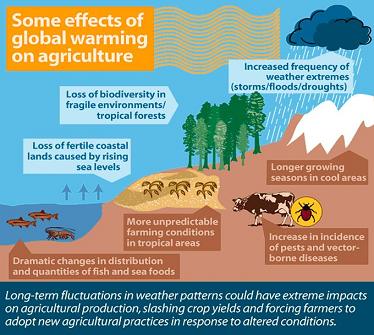
Climate change will affect availability of land, water and biodiversity. Changes in temperature and rainfall, as well as more frequent extreme weather patterns, are expected to result in agriculture production shortfalls with negative impact on access to food.
Therefore, climate change is likely to increase migration towards richer countries while rising sea levels may force many communities in low-lying coastal areas and river deltas to move to higher ground. These risks need to be taken into account, and the analysis of food 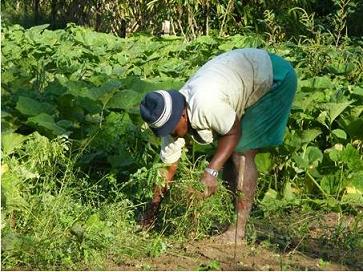
During the last three years, due to soaring food and energy prices, the number of hungry people has increased by another 75 million. This crisis is due to decreasing investment in agriculture in the poorest countries during the last 30 years.
The share of agriculture in public development aid declined from 17% in 1980 to 3% in 2006. Financial institutions drastically reduced their funds for agriculture.
We need to reverse this trend to come back to the previous level of investment. We also need to create food-enabling frameworks for a substantial increase of direct foreign investment in agriculture in low-income, food-deficient countries.
Equitable partnerships between countries which have land, water and a labour supply and countries which have financial resources, management facilities and markets would constitute a solid base for sustainable agriculture.
Agriculture has to be able to double global food production by 2050, when the world’s current population, now at six billion, will reach nine billion. This is the only way to mobilise the necessary funds for a renewal of agriculture which are estimated at US $30 billion per year by the special High-Level Task Force on the Global Food Crisis.
On this World Food Day 2008, I invite you to promote the declaration of the High-Level Conference on World Food Security, mobilising all stakeholders – national governments, international institutions, agricultural professional organisations, civil society and the private sector – to carry it out. More than ever, the future of this planet depends on our capacity to sustain the development of agriculture in the poorest countries.
Jacques Diouf
Director-General
Food and Agriculture Organisation of the United Nations
-------------------------
The impact of climate change on agriculture
We are experiencing higher temperatures and less rain than normal for this time of year. But what are the consequences and implications for agriculture now that we expect prolonged droughts followed by torrential rain in the north-west monsoon season?
Higher temperatures and less rain will severely affect farm water resources. Seasonal streams will dry up as the evaporation rate increases, and farmers will have to adopt new water-saving irrigation methods as well as water conservation measures.
Cultivation practices such as mulching and minimal tilling will also help, and some farmers may have to try out drought-tolerant crops such as cassava.
There will be an increase in certain pests and diseases such as whitefly and powdery mildew.
Higher temperatures will also mean farmers experience flower-drop, decreasing their crop yields and forcing them to evaluate new heat-tolerant crops.
Torrential downpours expected during the north-west monsoon will bring their own set of problems. Flooding will be the major setback bringing substantial crop losses, especially in flat, raised areas, but the problems can be reduced by unblocking and clearing storm drains, planning drainage systems better and using raised beds for planting.
Ultraviolet plastic shade houses will protect crops from heavy rains and increase flower hold. They will also mean fewer soil-splash diseases.
In the open field, certain mildews and rots may set in depending on crop type. There will be an increase in snail or slug damage.
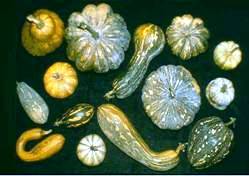
Farmers are encouraged to adopt contour planting and terracing on slopes to prevent soil erosion. Planting a cover crop is good for soil enrichment and as ground cover.
Fertilisers should be applied in small, frequent doses so as to prevent bleaching and run-off.
As high winds may also damage banana plantations and fruit orchards, staking and pruning are recommended to help minimise losses.
More ways in which climate change might affect agriculture
• The overall predictability of weather and climate would decrease, making planning of farm operations more difficult.
• Climate variability might increase, putting additional stress on fragile farming systems.
• Climate extremes – which are almost impossible to plan for – might become more frequent.
• The sea-level would rise, threatening valuable coastal agricultural land, particularly in low-lying small islands like Seychelles.
• Biological diversity such as mangroves and tropical forests could be reduced in some of the world's most fragile environments.
• Climatic and agro-ecological zones could shift forcing farmers to adapt. Such changes could also threaten natural vegetation and fauna.
• The current imbalance of food production between cool and temperate regions and tropical and subtropical regions could worsen.
• Distribution and quantities of fish and sea foods could change dramatically, wreaking havoc in established national fishery activities.
Global warming might also have some positive effects for farmers. Increases in carbon dioxide have a fertilising effect for many crops increasing growth rates and water use efficiency.
Climate change over the long-term, in particular global warming, could affect agriculture in a number of ways – the majority of which would threaten food security for the world's most vulnerable people.
--------------
How ozone depletion affects plants and agriculture
The depletion of the ozone layer affects plants and agriculture in many ways, for example:
• Excessive ultraviolet (UV) radiation inhibits the growth processes of almost all green plants.
• Ozone depletion may lead to a loss of plant species and reduce global food supply. Plants form the basis of the terrestrial food web, prevent soil erosion and water loss, are the primary producers of oxygen and a primary removal sink for carbon dioxide, a greenhouse gas.
• Exposure to UV radiation may have a dramatic effect on terrestrial plant life, although the impacts are at present poorly understood.
• Absorption of UV radiation varies widely from one organism to the next. In general, however, UV radiation affects plant growth by reducing leaf size and limiting the area available for energy capture during photosynthesis.
• Plant stunting and a reduction in total dry weight are also typically seen in UV-irradiated plants.
• Reduction in the nutrient content and the growth of the plants, especially in the pea and cabbage families.
• Reduction in quality of certain types of tomato, potato, sugar beet and soya bean has also been observed.
• Indirect changes caused by UV radiation, such as flowering and germination rates, changes in plant form and how nutrients are distributed within the plant may be more important than the damaging effects of the radiation itself.
Reliable scientific information on the effects of UV radiation on plants is limited, however. Much of the existing information comes from greenhouses where plants are more sensitive to UV radiation than those grown outdoors.
Many plants have developed mechanisms for protecting themselves against over-exposure to UV radiation, for example by shielding themselves with pigment and repairing damaged DNA or plant tissue.
For many organisms, shielding mechanisms may not be sufficient to protect against increased levels of UV radiation as a result of ozone depletion.
Effect on agriculture and research
• Exposure tests made in the US and Australia have shown more than 100 species of land plants could be sensitive to increases in UV radiation as a result of stratospheric ozone depletion.
• Some research has suggested a 25% ozone depletion could result in a comparable reduction in total soya bean crop yield.
• International research has revealed some species of rice suffer from even minor increases in UV radiation.
Mitigating approaches
• Research into the efficient breeding and cultivation of strong species may help to offset some of the damaging effects of stratospheric ozone loss and increase farmers’ ability to cope with changes.
• Promoting farming practices that withstand climate variations.
• Building up farmers’ capacity to adapt to long-term change – national decision-makers and the scientific community should improve monitoring of current conditions and long-term climate change, and encourage farsighted development choices.
------------------------
Climate change and water scarcity
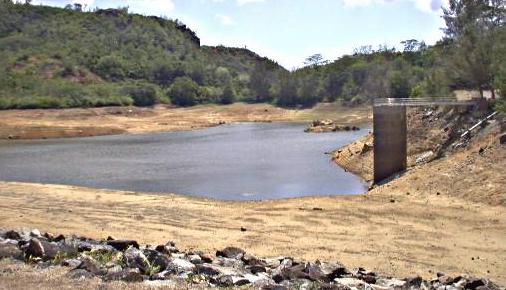
Climate change has been one of the causes of water scarcity in recent years and, like many countries, Seychelles has not been spared this problem.
Over the years the dry periods have become more severe, causing major water shortages.
Seychelles has a tropical climate with only two seasons each year: the north-west monsoon or wet period and the south-east monsoon or dry period, which generally falls between May and October.
The total mean annual rainfall is about 2,300mm, with only 30% of this falling during the dry period.
With such a low amount of rainfall, the level of evaporation is increased, causing us to experience a drought during this season.
The Public Utilities Corporation has formulated and is implementing various measures to cope with water scarcity.