

How Seychelles has met its ever-growing need for fuel |17 July 2010
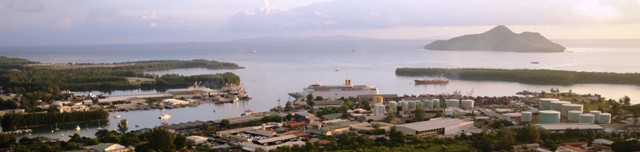
Can you imagine this? Long before electricity, diesel, kerosene, gasoline and liquefied petroleum gas became mundane features and yet necessities of life, our sources of fuel were…our forests. They provided us with timber and firewood. Lots of timber and lots of firewood.
The first inhabitants who arrived in Seychelles in 1770 and settled on the island of St Anne 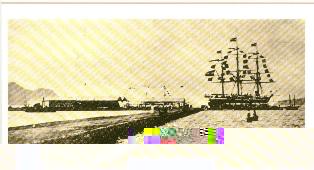
In 1778, when Charles Routier de Romainville (1742-1792) arrived with his contingent of soldiers and a group of slaves to create the first settlement on Mahe – L’Etablissement du Roi – he must have seen in the vast, verdant, forested mountains of Mahe an inexhaustible supply of fuel. Limitless. Abundant.
Indeed, during the years of French occupation when the arrival of African slaves increased the population of inhabitants, cooking fires consumed great quantities of trees which were felled with daily frequency and unscrupulous indiscrimination.
In 1810, when the British took possession of Seychelles, the lowland forests of Mahe still provided the almost 4,000 inhabitants with their sole source of fuel. At that time, Mahe was a typical 19th century colonial outpost struggling to establish the foundations of its prospective agricultural economy, and L’Etablissement du Roi had expanded, with the gradual construction of more buildings and basic amenities being the noble accomplishments of French commandant Jean-Baptiste Quéau de Quincy (1748-1827).
In 1841, when the town was renamed Victoria, commissioner Charles Etienne Mylius (1795-1873) initiated the building of a jetty with a grant of £50 from Mauritius, of which Seychelles was by then a dependency.
The jetty, which projected 200 feet into the sea, was a start in a bid to make Victoria an important seaport. A lighthouse was erected in 1872 when ships of the British East India Company and those of the Messageries Maritime were arriving at regular intervals to bring mail and cargoes of goods, and to take away the country’s export produce, which was mainly coconuts and coconut oil.
Those ships were, of course, steamers that ran on charcoal, and it soon became temptingly apparent that provisioning those ships with their fuel requirements would be a lucrative business for the colony. Mahe could produce many tons of charcoal.
In 1875, Hodoul Island was leased to Dr Henry Brooks (1831-1920), the chief medical officer, to set up a charcoal business able to hold 2,000 tons of charcoal.
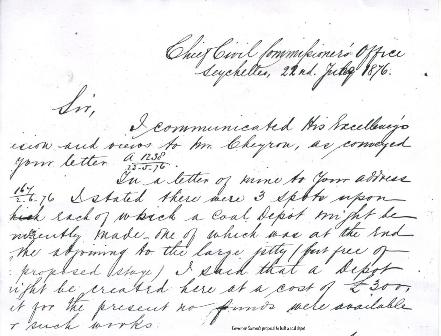
In 1876, the chief civil commissioner Charles Spencer Salmon (1832-1896) made a proposal to the colonial secretary to build a charcoal depot at a cost of £300.
Felix Desiré Cheyron (1840-1896), who was the French consular agent from Marseilles, had expressed his intention to rent the place for R200 a year. The depot, commonly known as the charcoal wharf, was basically a square at the end of the jetty measuring 91 feet by 91 feet. There was also, about 50 yards from the end of the pier, an islet measuring 73 feet by 86 feet, which was also leased to Cheyron for R50 a year. It eventually became known as Coal Shed Island.
The jetty which Mylius had started and which had, over the succeeding years and during the administrations of various commissioners and administrators, been lengthened, was now 3,179 feet long by 21 feet wide.

Charcoal was produced on a weekly basis from the forests of Le Niol and Sans Soucis. Many households on Mahe began to prefer the convenience of charcoal for cooking, especially when cast-iron cooking pots (marmites) were used.
It is not a surprising fact nor an appalling truth that if charcoal was an exceedingly remunerative business for the few who engaged in it, for the “charcoal burners” of Le Niol and Sans Soucis it was not a gainful occupation but merely a way to earn their livelihood.
The constant demand for the fuel kept up a despotic demand on the endurance of their muscles and nerves, while the forests that supplied the timber logs for burning restored their losses…to some extent.
In 1877, 82 vessels dropped anchor off Mahe. By then, landowners were desperate to satisfy the insatiable need for cloves (6,527 pounds in 1877), coconuts (722,580 in 1876) and vanilla (the first consignment of 60 kilos in 1877) in the European markets.
By 1884, with a growing population of 15,000 inhabitants, among whom avowedly only a few could afford to replace their crude “coconut-oil” vessels with imported lamps, the colony’s requirements for fuel other than its own charcoal or wood were becoming more evident. That year saw the import of 52 cases of petroleum oil, eight cases of lamps and nine cases of matches.
With the 1883 construction of another lighthouse on Denis island, it was obviously wise to consider that Mahe’s need for imported fuel would gradually increase during the succeeding years. There was already a hospital, a hotel and the St Louis College.
However, the demand for charcoal increased so much that in 1898, when Cheyron passed away, his charcoal wharf was bought by the imperial government for £1,030, with a view to turning Victoria Port into a veritable naval charcoaling station.
In 1889, the central portion of the charcoal wharf was raised about 18 inches on an area of 1,800 square yards. The granite side walls were repaired and raised to the same height on a length of 640 feet, and a wall was built on a length of 55 feet where it did not exist before. And up on the humid, forested slopes of Mahe, heavy clouds of smoke appeared frequently.
After Seychelles became a separate colony in 1903, local consumption of imported fuel rose constantly. That came about on account of more buildings and social infrastructure that were constructed.
The colony’s agricultural industry, however, did not require a single drop of fuel for its operation. The dozens of cinnamon oil distilleries and copra kilns that functioned every day all over the colony used coconut husks as fuel.
There was also one industry that used water power. That was the Cayole coir factory at Cascade, where a large waterwheel was operated by water brought down from the mountain by an aqueduct. This enabled a small Pelton wheel to develop 15 horsepower of energy, which created the mechanical motion in the small factory producing ropes.
In 1908, there were five soap factories, five mineral water factories, one ice factory and a rum distillery in Seychelles, and they all required some kind of imported fuel for their operation. The Blue Book Report for that year tells us that “16 packages of gas in flasks” were imported, as well as kerosene oil.

In 1913, when the new Government House was completed, Governor Charles Richard Mackey O’Brien (1859-1923) had the luxury of a small petrol-driven automatic electric lighting plant, which enabled him to indulge in his nocturnal studies. The town of Victoria was lit by paraffin lamps.
In 1925, when the first cars appeared on the streets of Mahe, 14,166 litres of motor spirit were imported along with 103,425 litres of kerosene oil. The following year, when on November 15 direct-current electricity was supplied to houses in Victoria, 108,554 litres of kerosene oil arrived in the country.
The contraption that supplied electricity daily from 6pm to 6am was generated by a 30-kilowatt dynamo belt driven by a steam engine powered by a wood fuel boiler. How much more fascinating can early 20th century ingenuity be, indeed!
The steam engine and 30-kilowatt dynamo were bought from the Norwegian whaling company on St Anne which had ceased operations.
In 1927, 105,102 litres of kerosene (at R12,597) and 4,000 litres of crude oil (at R250) were imported, as well as nine motor cars and 10 motor cycles. Colonial legislature imposed a 50 cents duty on every hectoliter of crude oil; 25,146 litres of motor spirit were imported.
The population of the colony was then 26,835, many of whom began to do their cooking on stoves in kitchens rather than on firewood al fresco; 620 such stoves were imported in 1927. So as far back as then, firewood cut from logs was being replaced gradually by imported fuel, namely kerosene.
In 1928, as more households in Victoria hankered for the modern glow of electricity, the Power House at Huteau Lane bought a 50hp diesel engine to replace the steam engine. A little later, a second diesel engine and a belt-driven dynamo of 20 kilowatts were installed. The Power House then had a capacity of 50 kilowatts. (Almost 100 years later, in 1998, the electricity supply of the Public Utilities Corporation had a capacity of 37.5 MEGA watts).
The demand for electricity kept on increasing, and in consideration of this by 1938 a 10hp diesel engine with a 50-kilowatt diesel generator was installed. There were then 300 electricity consumers on Mahe. Steam ships had been replaced by modern vessels and so charcoal had no export market.
The charcoal wharf remained a fuel depot, while Coal Shed Island was occupied by the Shell company’s petroleum warehouse. The British oil giant would be the country’s sole fuel provider until 1985. (Nowadays, people still refer to the fuel station as Shell).
If, in the course of modern development and social progress, fuel and economic prosperity are inseparable partners, in Seychelles this has been a powerful truth all the way up to the present time.
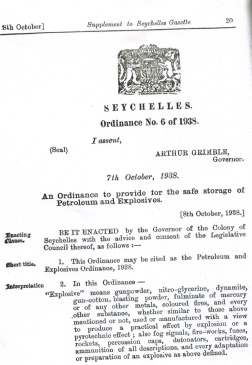
In 1938, when it was a foregone conclusion that the country’s fuel requirements and consumption would continue to increase, and that consequently more fuel would have to be imported, governor Sir Arthur Grimble (1888-1956) enacted an ordinance to provide for the safe storage of petroleum and explosives. Shell soon built a petrol station in Victoria and eventually, as vehicles increased on the island, other stations were built at Anse Royale and Beau Vallon.
The combination of the Iranian revolution and the Iran-Iraq war in the late 70s and early 80s caused the price of crude oil to more than double, from US$14 to US$35 a barrel. During this period, energy security was high on the agenda of most countries.
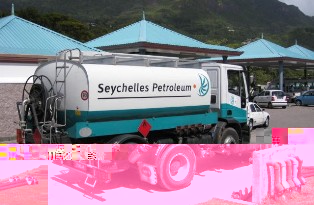
In the context of Seychelles, the Shell company, the country’s sole supplier of fuel, was nationalised. Following the cessation of activities by Shell on July 15, 1985, the Seychelles Petroleum Company was born and took over the responsibility for fuel procurement, distribution, sales and ensuring security of supply.
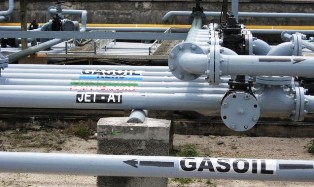
Sepec immediately entered into a management contract with Omisa, a Swiss-based company, to provide management, financial and engineering help.
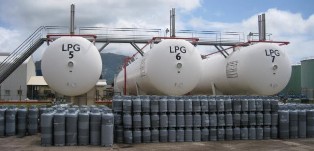
In 1994, after many years when paraffin stoves were used for cooking, Sepec introduced gas to our homes. Initially, there were disgruntled objections from the older generation, but eventually the safety and economical convenience of gas prevailed over the sentimentality of tradition.
In January 1996 the management agreement with Omisa was terminated and a full restructuring of Sepec’s management and operations was undertaken. The current chairman/chief executive, Captain Guy Adam, was appointed to manage the company.
Today Sepec is managed and operated by a 100% Seychellois team and its turnover has increased from R367 million in 1995 to R3,932 million in 2009. Sepec has grown over the last 25 years and has gained much experience in the petroleum field.

The growth has come about predominantly in the last 15 years, with a marked increase in re-exports and the inclusion of the shipping arm. The fusion of Sepec with the Seychelles National Oil Company in 2005 transformed it into a fully integrated oil company with activities in the upstream, downstream and shipping sectors.
We are a nation of 87,000 inhabitants. We consume fuel in our work and leisure activities. Our social and economic welfare depends on it. We cannot even presume to gauge or measure our inexorable need for fuel. The urgent demands of our utter dependence on fuel surpass our mere concept of it.
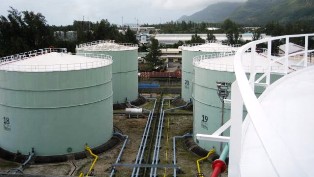
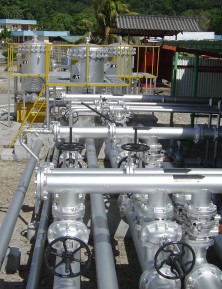
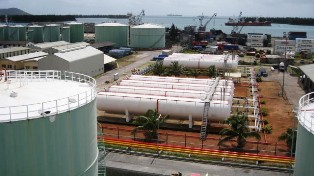
Once upon a time the source of our fuel was our forests. Today it is fuel stored in large tanks at the New Port on Mahe and at Baie Ste Anne on Praslin.