


Seychellois perform Chinese lion dance |08 February 2014
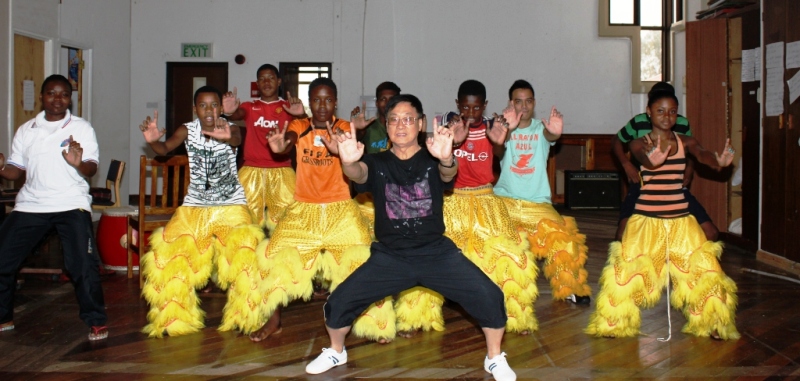
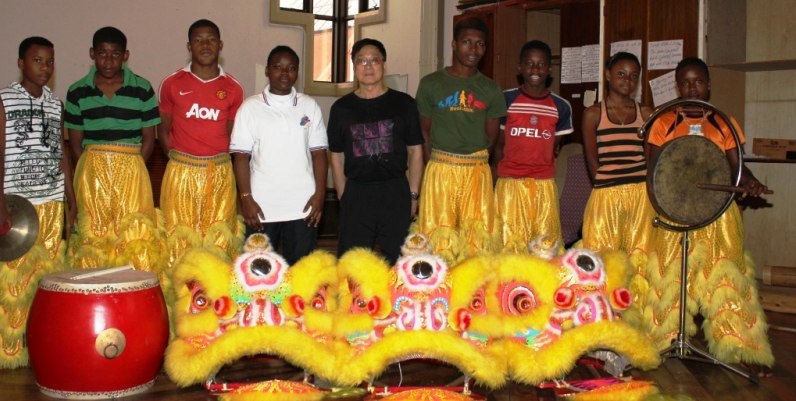
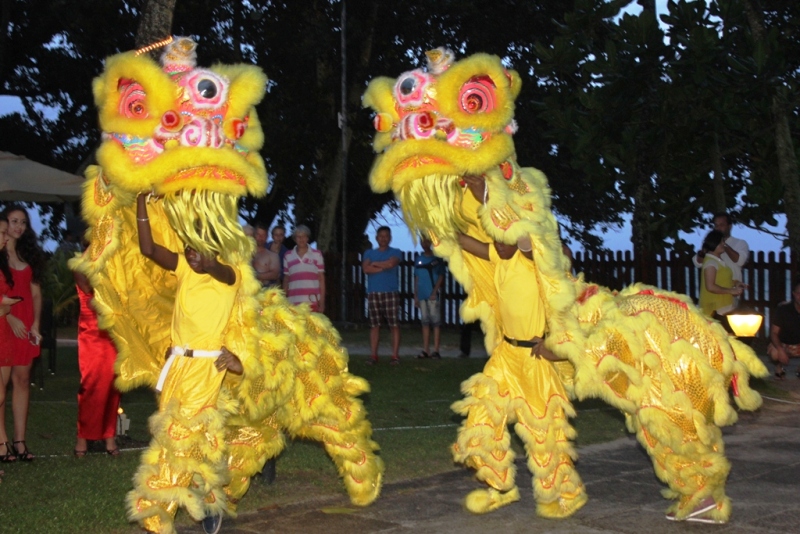
During the official launch of the Seychelles-China Day celebrations held at the Berjaya Beau Vallon Bay Beach Resort last Friday, the lion dance featured among the many entertaining performances for the occasion. Although it is a Chinese art, the dance was performed by young Seychellois who had been trained by Chinese instructors.
It all started with the placements of adverts on the local television seeking young people who are interested in learning the lion dance to perform in the coming Seychelles-China Day celebrations.
Following the recruitment of eight youngsters -- two girls and eight boys aged from 13 to 23 years -- two Chinese instructors arrived in Seychelles early January prior to the celebrations to train the Seychellois youths in that dance. They left a week later but the training continued under the guidance of Marietta Matombe, manager of the National Cultural Troupe of the Ministry of Tourism and Culture.
“It was not that difficult for the young people to continue with the dance techniques as they were already quite knowledgeable about them after having performed it in the 2012 Carnaval International de Victoria,” said Ms Matombe.
According to traditional Chinese belief, the lion signifies courage, stability and superiority. The lion dance is performed to chase away ghosts and evil spirits, and since the monsters, ghosts, evil spirits and giants like Nian are afraid of loud noises, the dance has become a natural complement to the fire crackers' noise. Clashing cymbals, a gong and drums usually accompany this lively scene. The lion’s every movement has a specific musical rhythm. The music follows the moves of the lion, the drum follows the lion, the cymbals and the gong follow the drum player. Throughout the performance, the lion will mimic various moods and demonstrate similar physical gestures allowing the lion to look life-like.
The lion dance combines art, history and kung fu moves. Normally the performers are kung fu practitioners, and a group of lion dancers consist of about 10 people.
Lion dances take place during the first few days of the Chinese New Year.
The lion dance is performed by two people, one at the head of the lion, one at the tail. The head of the lion is made out of papier mâché and the nearly constant twinkle and movement of the lion’s eyelids as well as the movement of the head and mouth are supposed to enhance the lion’s vitality and longevity, while the tail of the lion sweeps away bad fortune and unpleasant things from last year.
A mirror is attached to the head of the lion. Mirrors are believed to expel negative energy, evil and bad spirits, since negative energy would be reflected backwards, evil spirit would be frightened by their own appearance when looking into the mirror and hence would disappear.
One horn is attached to the lion’s forehead.
A lion dance starts and ends at a temple, where the lions will pay respect not only to the temple and its deities, but to the ancestral hall as well.
The procession will lead through the streets, bringing joy and happiness to the people. Respect will be paid to all temple and its deities located en route.
The dramatic climax of the lion dance is the "Cai Qing" or 'Picking the Green'. The green here refers to vegetable leaves which are tied to a piece of string which also has a red packet attached containing money. The string is hung above the door of the business, shop (or home), and the lion 'eats' both, the leaves and the red packet. Lying on the floor the leaves are 'chewed' by the lion while the musicians play a dramatic rolling crescendo. The lull is broken as the lion explodes back into activity, spitting out the leaves. This is a symbolic act of blessing by the lion, with the spitting out of the leaves signifying that there will be an abundance of everything in the coming year.
A shop, business (or household) being visited by the performers of the lion dance will attract good luck in the year to come and should a family member or the owner of a business stick his or her head into the lion’s mouth, the year to come will even be luckier and more prosperous. The lions are normally awarded with customary gifts like oranges symbolising wealth or mandarins/ tangerines symbolising luck and red envelopes containing money.
Compiled by Marylene Julie