


Seychelles holds first national health research and ethics conference |24 July 2015
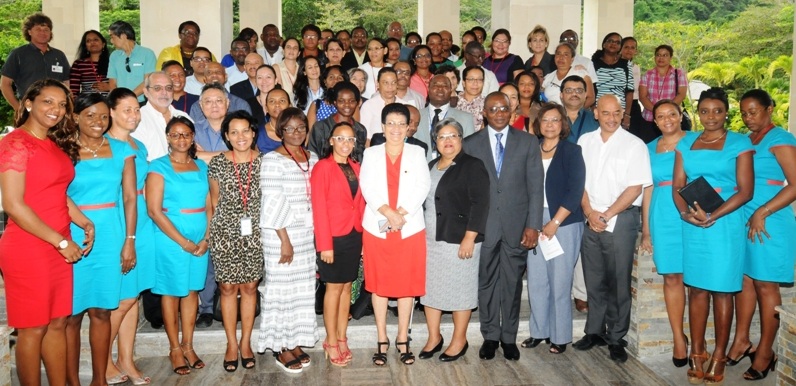
A two-day national conference on health research and ethics opened yesterday at the Savoy Resort and Spa.
The conference has been organised by the Health Research and Ethics Committee (HREC) of the Ministry of Health and the World Health Organisation (WHO).
Health Minister Mitcy Larue, WHO representative Martin Ota and other medical practitioners and stakeholders including representatives from the Ethiopian, Ugandan and Zimbabwean HRECs are among the delegates.
The National Health Research and Ethics Conference aims to attain a number of interrelated objectives such as highlighting the importance of having robust national health research systems in place to facilitate the conduct and use of health research; to create awareness of the role and work of the Health Research and Ethics committee (HREC); to create awareness of the role and importance of sound research for evidenced-based decision making and programme development; to create an avenue for interested researchers to disseminate findings of their research and to network with other ethics committees within the region and beyond to share best practices and experiences.
The conference is the first of its kind in the African region and as such has been given priority consideration by the WHO.
“The timing of the conference is just right. More and more, as the Ministry of Health, we are emphasising the need for all health professionals to consider the impact of their practice on the population they seek to serve. It is fitting that our population be seen as partners in developing a sustainable health care system,” noted Minister Larue.
She added that “data and information is collected in research with the aim to generate new knowledge”.
It is also expected that study procedures may lead human beings to become “exposed to manipulation, intervention, observation, or other interaction with investigators either directly or through alteration of their environment”.
“Research in Seychelles is diverse, in-depth and innovative. Topics have ranged from breastfeeding to HIV and Aids to nutrition and diabetes. Research has been done to find out which works better, and create new and novel ways of treating health problems. More and more people, from academics to practioners, are conducting research in Seychelles to help guide policies and programmatic actions. Research also helps to ensure that decisions taken by policy-makers are based on evidence and that science is given front row seat to public health policies that may incur controversies linked to values and morality. It is also vital to use best practices, not to reinvent the wheel, and to make use of valid, reliable and peer-reviewed data and information from our Seychellois researchers or their collaborators as we strive to push forward to create a health system that is efficient, effective and productive,” said the minister.
In Seychelles, the ethics committee within the Ministry of Health dates back to the early 1990s and was known as the medical research Ethics Committee, whose chairperson was Francis Chang-Sam. In 2011 the name was changed to Health Research and Ethics Committee as the scope of research covered was beyond medical field only – but health in general and the assessment is beyond just ethical evaluation.
“Now the committee provides technical and ethical assessment for all health research proposals, particularly with respect to the need for carrying out the study involving human participants directly and/or indirectly; acceptability of the research design and study instruments; training and experience of the principal investigator(s); risks and benefits to the participants and assurance that the research will have a direct or potential benefit for the population. The committee also provides feedback and makes recommendations to the principal investigator(s). Should the committee consider that the proposal needs revision or cannot be approved, complete and clear reasons for such decision shall be provided to the principal investigator(s). During the past five years, 33 study projects were reviewed by the committee – 22 were approved, eight were deferred and six final reports were collected,” said Anna-Lisa Labiche, chairperson of the HREC.
The other members of the committee are Danny Poiret, Dr Cornelia Atsyor, Monica Servina, Jean-Michel Domingue, Benjamin Vel, Dr Jastin Bibi and Sharon Jean.
Caption:
Guests and delegates in a souvenir photograph after the opening ceremony