


Anti-Corruption Commission Seychelles (ACCS) up and running |28 April 2017
Public can start filing their complaints
The Anti-Corruption Commission Seychelles (ACCS) has announced that its doors are now open to the public to receive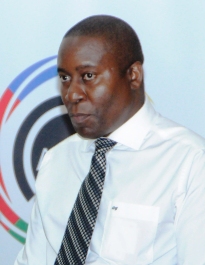 their complaints.
And as mentioned by chairman Justice Duncan Gaswaga in his opening address, the ACCS’ mandate is to receive complaints from any person or entity; investigate, detect and prevent practices of corruption in both the public and private sector.
ACCS has assured that the identity of the whistleblower or person making a complaint will not be disclosed.
This is the first public event by the commission since its set up.
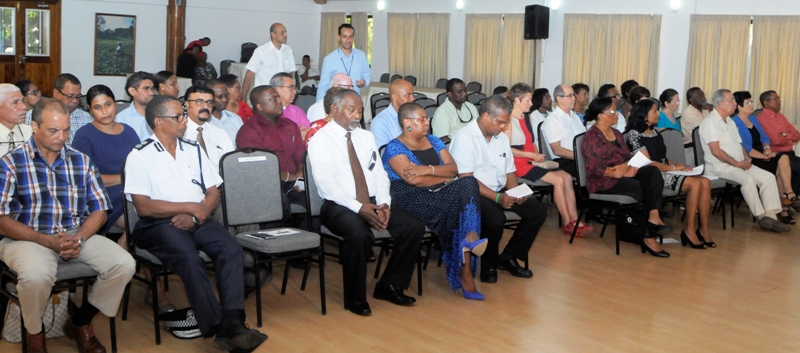
The official launch of the commission was held yesterday morning at the Seychelles Trading Company (STC) conference centre on Bois de Rose Avenue.
Members of the public who have any concrete evidence of corrupt cases against a person or entity can forward their complaints via email on complaints01@accs.sc. Telephone +248 4326 061 or call in person at the ACCS office, Docklands Building (3rd Floor), P O Box 1456, Victoria, Mahé, Seychelles.
The event was attended by management and commissioners of ACCS; Minister for Family Affairs Jeanne Simeon and Minister for Home Affairs Mitcy Larue, high officials of the National Assembly, the Central Bank of Seychelles, judiciary, diplomatic corps, churches, other dignitaries and relevant stakeholders.
“This commission has been established to fight corruption. Nothing more, nothing less,” stated May de Silva, chief executive of ACCS.
She remarked the Anti Corruption Act of 2016 gives the commission the power to investigate, detect and prevent corruption. And in order to sustain high levels of integrity, transparency and probity in both the private and public sectors, the ACCS has to implement its prevention programme which will be its strategic and key priority over the coming years.
“This does not take away the focus from our other quite important work of detecting and investigating corruption. Our priority is to prevent corruption – full stop. When I say our priority, I do not mean only OUR Commission, I mean each and every one of US – it is also YOUR responsibility to promote responsible and high standards of doing business and stop corrupt practices in your organisations and companies.
“Prevention of corruption is about ethics, good governance and best practices in all facets of Seychelles society. We aim to promote best practice, discourage malpractice in both government and the private sector whether it is knowingly or unknowingly. Our prevention programme is based on a modern concept and model called “choice architecture”. We can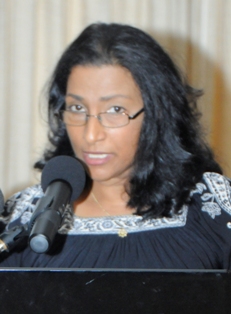 carefully design and foster an environment in which people make decisions to promote optimal ethical choices. Our prevention programme is based on a framework that allow organisations to rid themselves of an ingrained mind set which can lead to unhealthy and corrupt practices,” said Ms de Silva.
She also gave some examples of corrupt practices that could lead to large fines and years of imprisonment like unlawful gratification; abuse of position; interference with witnesses; liability for corrupt acquisitions; eg. property acquisition; gratification for giving assistance; ie. with regards to contracts and unlawful acquisition of public funds and property - to name a few.
“Ladies and gentlemen. Today we denounce corruptions in all its forms. By standing here with us in the open as we take the first step in fighting corruption, you make history in this country. A person of integrity never fears to face the world at anytime. As the leadership of this beautiful nation, we should be exemplary and not only condemn but also practically avoid and fight corruption. Each one of us should shun and desist from corruption if the citizens are to enjoy better services. The Commission shall not condone impunity. Not even the so-called small fish will be left swimming with impunity because it is the widespread cases of such small acts of corruption cumulatively that amount to a big dent on the economy of a country,” said Mr Gaswaga.
He added the commission for the past few months has been carrying out a study to establish where the country stands within corruption, the root causes of the vice, the types and forms of corruption and so on.
“Our aim is to reduce corruption and have as much as possible a corruption-free nation,” he said.
And since it now knows where it wants to go, Mr Gaswaga said the commission has designed various methods captured in their strategic plan 2016-2023 that will be used to curb corruption in order to get the country there.
“This fight against corruption should not be left to only the Commission and government and its agencies but should be the duty of every citizen,” he said.
As examples, he cited families instilling good morals and religious values in our children, the role of education and religious institutions in the lives of the child, among others.