


Increase in utilities tariffs as from March 1 next year |06 December 2017
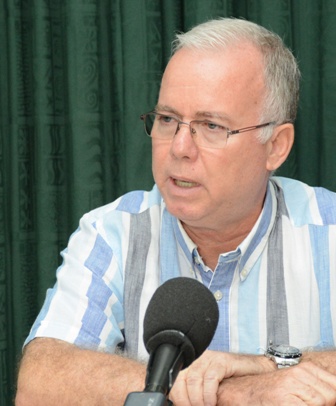
As from March 1 next year, domestic consumers will see an increase of 16% in electricity, 5% in water and 13% in sewerage tariffs, the Public Utilities Corporation has announced.
Giving details on the increases, the chief executive of the Public Utilities Corporation (PUC) Philip Morin said they will reflect the corporation’s operational and investment costs to maintain long term financial sustainability.
To do this effectively, PUC will revise its tariffs annually under the Tariff Rebalancing Programme which was first initiated in 2013.
He explained that currently the domestic sector tariff is heavily subsidised. Besides PUC incurring losses because of this, these subsidised rates do not provide the appropriate incentives for consumers to reduce energy consumption at home by purchasing power efficient devices and reducing waste.
Mr Morin explained that consumers in the industrial and commercial sectors will see no change in electricity tariff they are paying whereas for water, those using below 5m³ monthly will see a marginal increase of 6% while those using above that amount the tariff will remain unchanged. The tariff for sewerage will see a 12% increase.
Mr Morin stressed that the increases in utilities tariffs is part of the Tariff Rebalancing Programme and has nothing to do with the fuel adjustment charges carried out every three months based on changes in fuel prices on the international market.
Mr Morin explained that the PUC is investing considerably in and expanding the infrastructure necessary to continue improving the three services it provides, namely electricity, water and sewerage.
“PUC is investing heavily in these infrastructure, for example the raising of the La Gogue dam, installing new generator sets at the Roche Caïman power station, laying new underground cables …which will require massive investments,” Mr Morin explained.
“Domestic consumers of electricity for instance are currently being charged only around 75 cents per kWh for the first 200 kWh but it is costing PUC R1.77 to produce a kWh of electricity. As for industrial and commercial consumers, they are paying around R4 per kWh. It is important therefore to reduce the gap and pass on some of the costs to the domestic consumers and this would additionally help increase PUC’s revenue to be reinvested as previously announced in utilities’ infrastructure,” Mr Morin pointed out.
He went on to add that next year PUC will need around R653 million to invest in these infrastructures and revenue collected will help towards these investment costs. But Mr Morin said PUC will in the future continue to relook at its investment programme to assess what remains to be done and see whether there is an opportunity to review the tariffs and adjust them accordingly.
Domestic consumers are presently being charged R7.80 for every 1,000 litres of water consumed between 0 to 5,000 litres. 1m³ of water is equal to 1,000 litres.
The new rate as from March 1 next year will be R8.36 for every 1,000 litres ‒ an increase of 56 cents.
A consumer with a single phase domestic electricity bill will see the increase as follows:
If he/she is currently using 300 kWh, he/she is being charged R348.56 and with the new tariff as from March 1 he/she will be charged R411.56 ‒ an increase of R63.
For domestic water consumption, the first 10m³ has increased by 56 cents per m³ and if a consumer is currently consuming 20m³ per month he/she is being charged R297 but will be charged R317 under the new tariffs ‒ an increase of R20.
20m³ of water being used with sewerage is currently being charged R179 per month but with the tariff increase the new amount that will be charged is R199 ‒ an increase of R20.