


President Faure visits media houses on World Press Freedom Day |04 May 2018
‘Democracy in Seychelles can’t evolve without the development of the media’
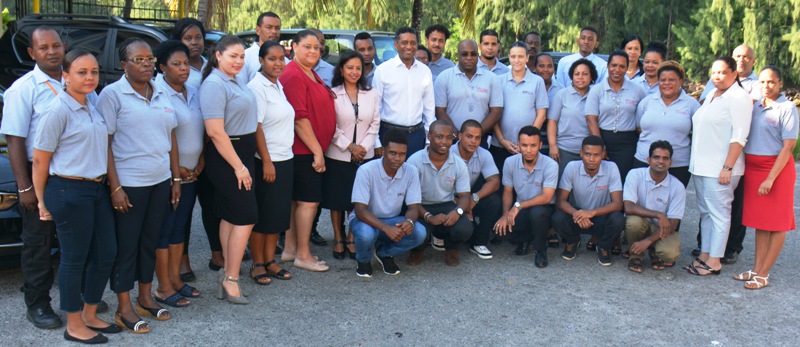
President Danny Faure has said that the work of journalists should be valued by everybody, especially the government.
He said this during visits to two print media houses yesterday ‒ the Seychelles NATION and Today in Seychelles ‒ where he saluted the work of local journalists and other media personnel and thanked them for their contributions towards democracy in Seychelles. His visits coincided with the 25th World Press Freedom Day celebrated yesterday.
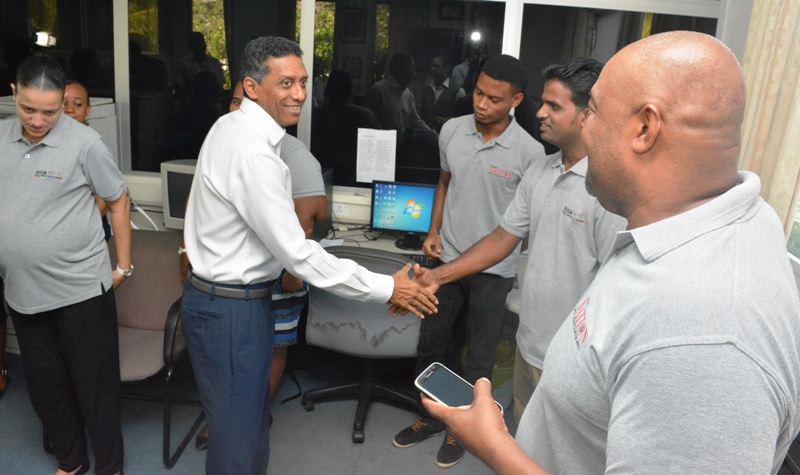
Mr Faure added that since becoming president, he has been doing his utmost to educate and inform the Seychellois public on the importance of the work of journalists towards society and he considers the media as the fourth pillar of democracy in Seychelles. He noted that Seychelles’ democracy is evolving with the contributions from journalists and the supporting team working behind.
It is the first time that President Faure visits the two print media.
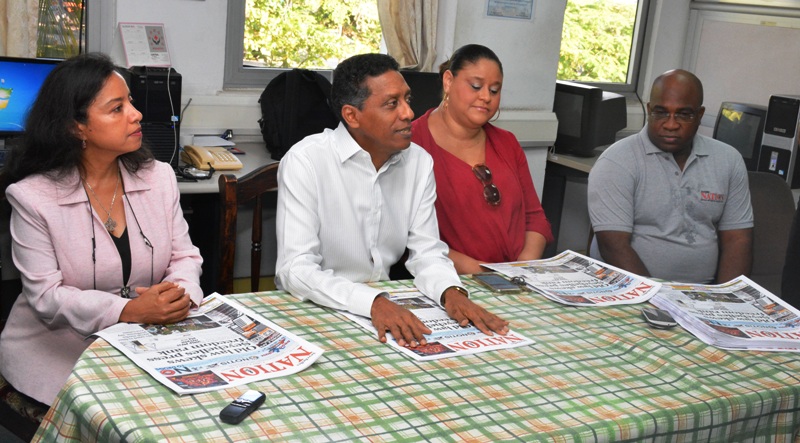
“Journalists do important work for our society. I always say that the media is the fourth pillar of our democracy. Democracy in Seychelles cannot evolve without the development of the media. I would like to thank you all for your hard work, and take this opportunity to congratulate all journalists working in Seychelles and encourage you to continue the good work,” said the president.
“It is very important for journalists to be exposed and professionally trained as there are a lot of subjects that the country needs to discuss and those subjects need to be understood firstly by the journalists and when they understand those subjects, they will be better equipped to bring them to the attention of our citizens,” he said and noted that his government will continue to create the environment for the media to progress in Seychelles.
President Faure started his early morning visit to the National Information Services Agency’s (Nisa) head office at Laurier Avenue where most of the agency’s 43 staff including the seven journalists and four photographers are based. He was welcomed by the chairperson of the board of Nisa, Lucy Athanasius, her deputy Roseline Hoareau and chief executive Gerard Govinden.
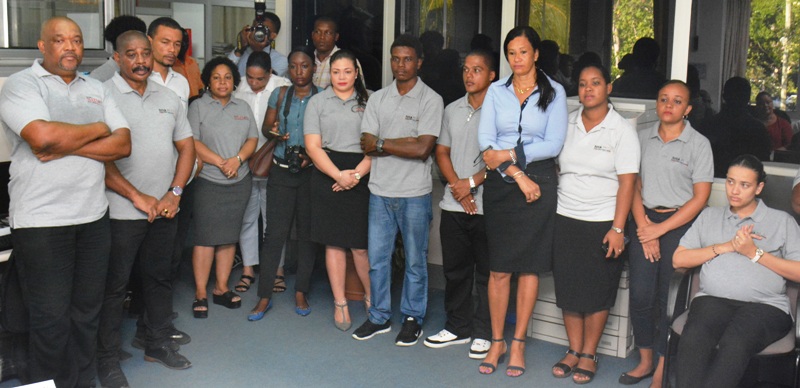
The president’s tour of the premises included the various sections and offices including the sales office, the customer liaison office, documentation centre, production section, news room. Following his tour, the president held a brief meeting with the management and staff in the news room.
“Our society and our citizens need to have the comfort that we have journalists and others who are working hard to promote democracy, to bring information that is correct, journalists who conduct investigations and bring forward the truth to the Seychellois people,” he told Nisa staff.
President Faure later visited the Today in Seychelles office at Le Chantier, where he was met by managing director Veronica Maria and Editor-in-Chief Kate Carolus. Apart from visiting their main news room, he toured other sections and interacted with staff.
Speaking at the Today in Seychelles office, President Faure said: “I personally value the work that journalists across the country are doing and in particular the work that Today in Seychelles is doing as an independent newspaper. I want to encourage you to continue your work for the people and for the country”.
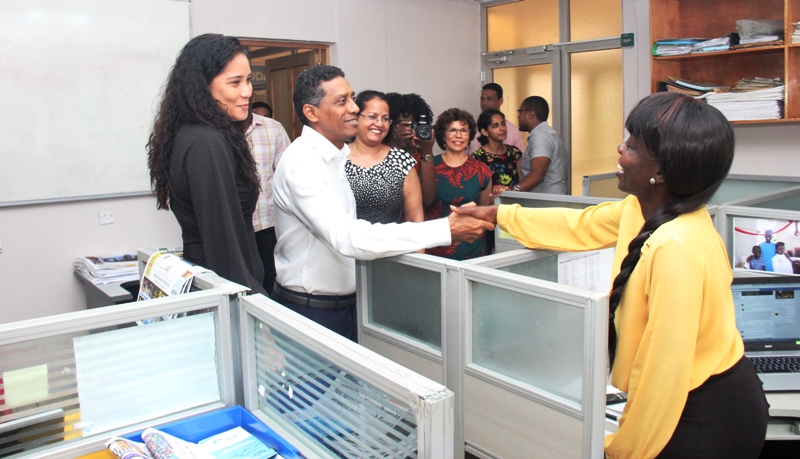
Mrs Maria thanked the president for visiting Today in Seychelles saying: “This is the first time that an independent paper is visited by a president. I told my staff this morning that today is our day, a day for journalists everywhere. Thank you for this honour”.
The oldest newspaper in the country, the Seychelles NATION is more than 40 years old and is the national daily. It is printed by Nisa which was created in May 2010 as a non-budget dependent agency.
Nisa chief executive Gerard Govinden said even though there is not enough trained journalists around, Seychelles NATION is delivering on its mandate which is to educate, inform and entertain the public although there is still room for improvement.
He noted that “it remains a challenge to access information from certain organisations, but on the whole the job of a journalist is very tiring and challenging as you work long hours, weekends and public holidays to gather information and cover events as and when they happen”.
Today in Seychelles was set up in March 1, 2011. Among the 18 staff, eight are full time journalists but it also has freelancers.
The managing director of Today in Seychelles, Veronica Maria, said the media landscape is different now and journalists can now work freely to cover matters of national interest but has to do so in a factual and balanced manner.
Both Mr Govinden and Mrs Maria spoke about the challenges they face to recruit qualified journalists to work for their newspapers and the need for a media school in Seychelles to encourage young people who want to study journalism and communications.
The previous media school in Seychelles closed down in December 1991.