


Tackling reading difficulties in early childhood |23 August 2018
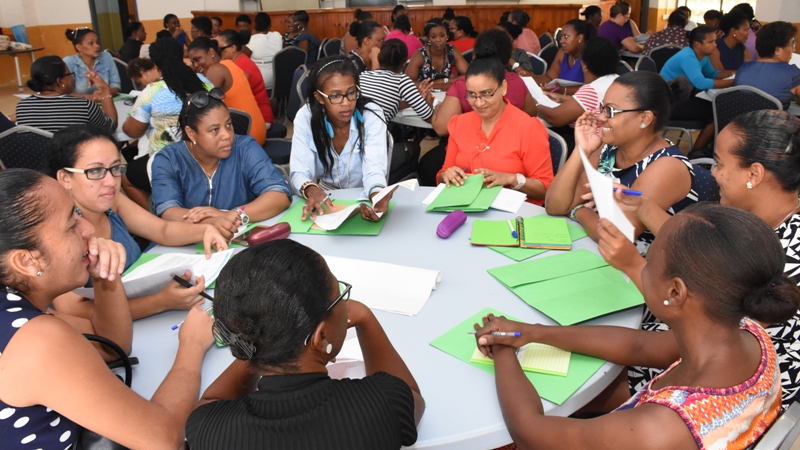
Reading difficulties and the various methods and strategies of intervention to help pupils overcome such barriers was the main focus of a training session organised for Primary 2 educators and Special Educational Needs Coordinators (SENCO).
The second and final training session which forms part of the newly launched reading programme directed at Primary 2 pupils took place yesterday at the Ministry of Education Hall, Mont Fleuri.
The programme aims to improve literacy and numeracy skills among Primary 2 pupils as well as boost performance in key stage assessments.
Special reading interventions for struggling readers was the focal point of the workshop which aims to equip teachers with the right teaching and learning strategies to help such students.
Special Education Needs Coordinator Daniella Vidot facilitated the session placing emphasis on different methods of intervention that can be used within schools.
Academic interventions are used in developed countries such as the United States to provide early and intensive assistance to pupils who are at risk of underperforming as compared to the appropriate grade or age level.
Miss Vidot urged all educators to continue to strive harder for better performance in primary schools across the island and to not neglect pupils with learning difficulties.
Through discussions and role-plays by the educators, different types of reading disabilities that teachers encounter in the classroom were identified.
Pupils with reading disabilities display difficulty reading and may have limited language-based processing skills as compared to their counterparts. Depending on the severity, this can affect reading fluency, decoding and comprehension and subsequently affect writing and spelling.
Miss Vidot explained that there are various ways to discern whether a pupil suffers from reading difficulties.
She highlighted some common difficulties including failure to demonstrate word attack skills, reading words correctly in one context but not another, inability to read independently as well as difficulty with sound-symbol relationships and phonic skills.
“It is essential that we identify what difficulties pupils are faced with so we can implement the right interventions and provide them with relevant support,” she said.
Each educator was handed a guide detailing appropriate intervention plans for each difficulty as well as recommended teaching and learning strategies.
As from today (August 23) to September 5, the educators will be working with selected students in their respective schools who have been identified as having reading difficulties where they will have an opportunity to apply the intervention strategies.
A steering committee set up by the ministry will visit schools to monitor progress and evaluate the effectiveness of the programme.
“We need to monitor the pupils and their progress as it will not only be indicative of the effectiveness of the programme but it will also help us to uncover where the issues lie — do we need a change in teaching strategy? Do we need to reform the curriculum?”.
Upon completion of the 10-day intervention period, the steering committee will report back to the ministry for decisions to be taken as to how to implement the programme on a long-term basis and possibly integrate the programme into the school curriculum.